English
  عربى
عربى  Español
  中文简体
中文简体

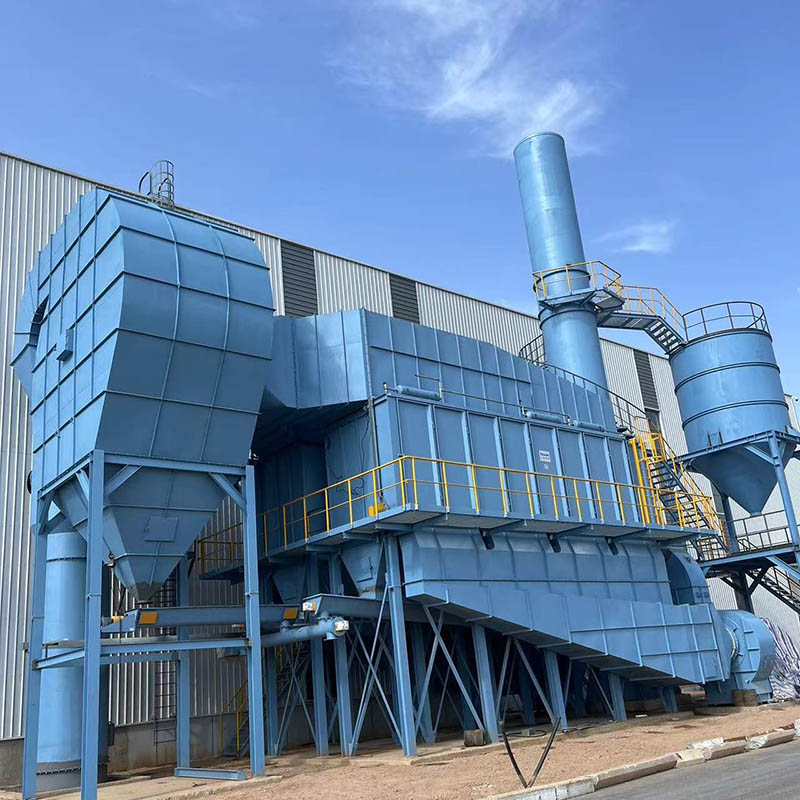
Most industrial exhaust streams that require fume gas treatment contain more than one pollutant. A nonferrous smelting line can emit metal fume, acid gases and incandescent sparks in the same minute. A packaging printing shop may generate almost no dust but high solvent loads. A chemical plant can switch between both extremes within one shift. A fume gas treatment system, therefore, is not a single filter; it is an engineered sequence of equipment, and the weakest stage determines overall performance.
The practical conclusion is to define the full pollutant profile before comparing equipment prices, then design the chain as a whole. In that chain, four decisions carry most of the risk: capture, pre-treatment, the core separation device, and final gas-phase polishing. This article explains each decision and shows how to select a system that stays compliant for years, not only during commissioning.
What a Fume Gas Treatment System Is
A fume gas treatment system captures contaminated exhaust gas at its source, conditions the gas, separates the target pollutants, and returns cleaned air to the environment. It is used wherever industrial processes generate high-temperature smoke, metal fume, corrosive gas or solvent vapor. Its functions fall into three categories:
- Particulate removal: coarse dust, metal oxide fume, welding smoke and condensed aerosols.
- Gas cleaning: acid gases such as HCl, SO2 and HF that need neutralization rather than simple filtration.
- VOC and odor control: solvent vapor, drying emissions and chemical odors treated by adsorption or catalytic oxidation.
Although emission limits and workplace exposure standards differ by country and by pollutant, the engineering logic is the same. If the capture stage fails to pull fume into the duct, no downstream equipment can compensate. If the pre-treatment stage lets sparks reach fabric media, the filter can burn or age prematurely. If the collector is undersized, pressure drop rises and maintenance costs accelerate. Every stage must be sized against the real process, not against a generic brochure specification.
The Core Process Steps in a Fume Gas Treatment System
Step 1: Capture and Transport
Capture quality is the largest single influence on system performance. An enclosed hood around a furnace, ladle or tundish can collect more than 95% of the emitted fume, while an open canopy hood may achieve only 70–80%. Hood geometry, duct velocity and the distance from the hood to the emission source must be calculated together. Undersized ducts are among the most common causes of poor performance in installed systems; a transport velocity of 18–23 m/s is normally recommended for dust-laden air, depending on particle density.
Step 2: Pre-Treatment to Protect the Collector
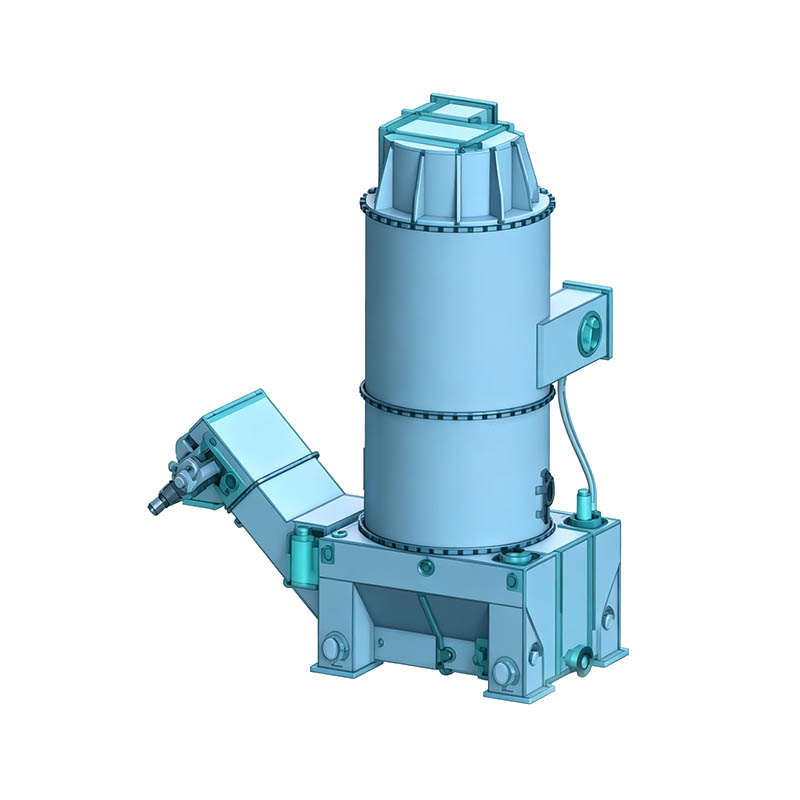
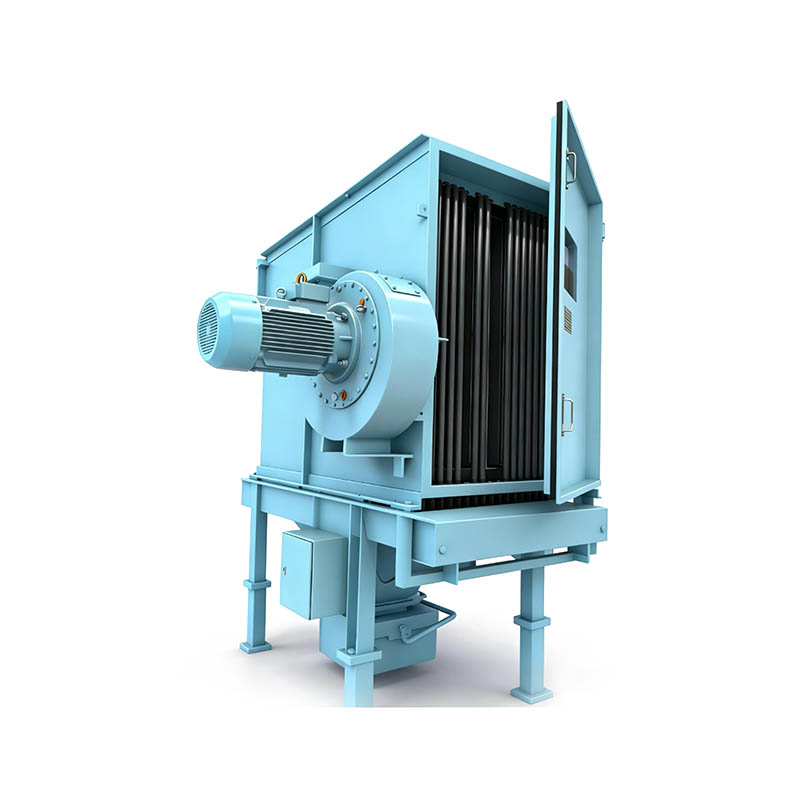
High-temperature gas or gas carrying incandescent particles will damage filter media quickly if it enters the collector directly. Casting, steelmaking and nonferrous processes frequently send sparks toward the filtration unit, so these particles must be removed before separation. A spark catcher extracts burning particles by changing the flow direction and letting them fall into a collection chamber. For even hotter gas streams, a TU/TS series air cooler reduces the temperature to the safe range of standard filter media, typically below 130–150°C for polyester bags and above 200°C for engineered fabrics.
 Wholesale Spark Arrestor Manufacturer, FactoryChangzhou Thinks Environmental Technology Co., Ltd is China Wholesale Spark Arrestor Manufacturer and OEM/ODM Factory,The Spark Arresto...View Product →
Step 3: Separation and Collection
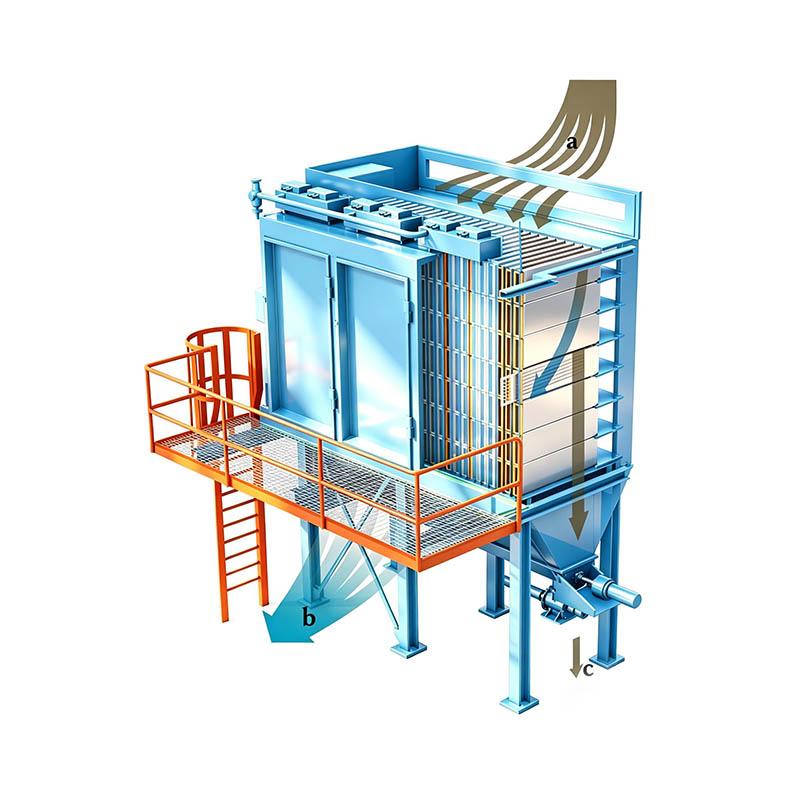
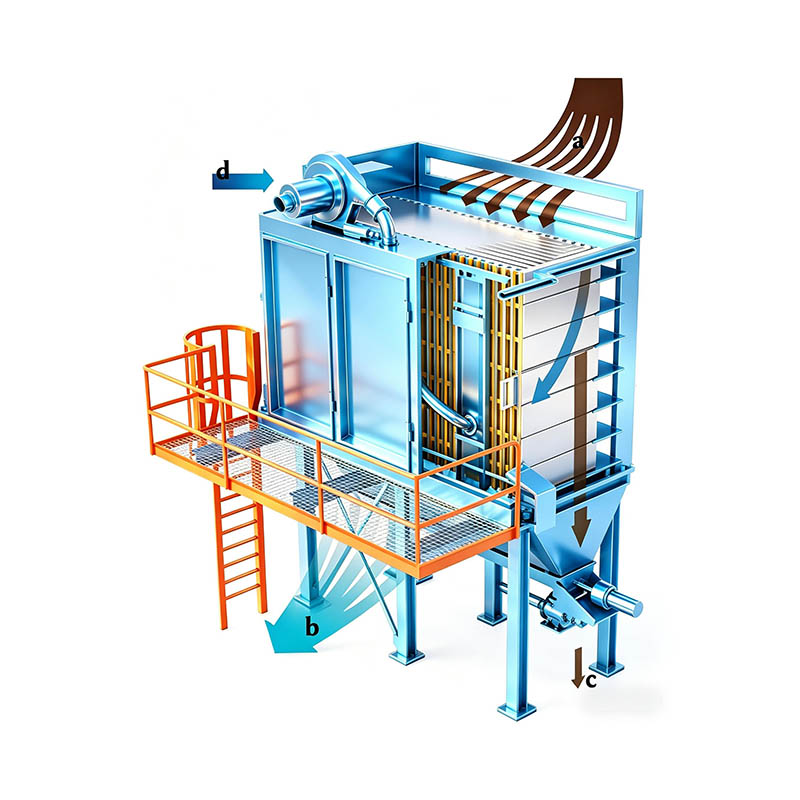
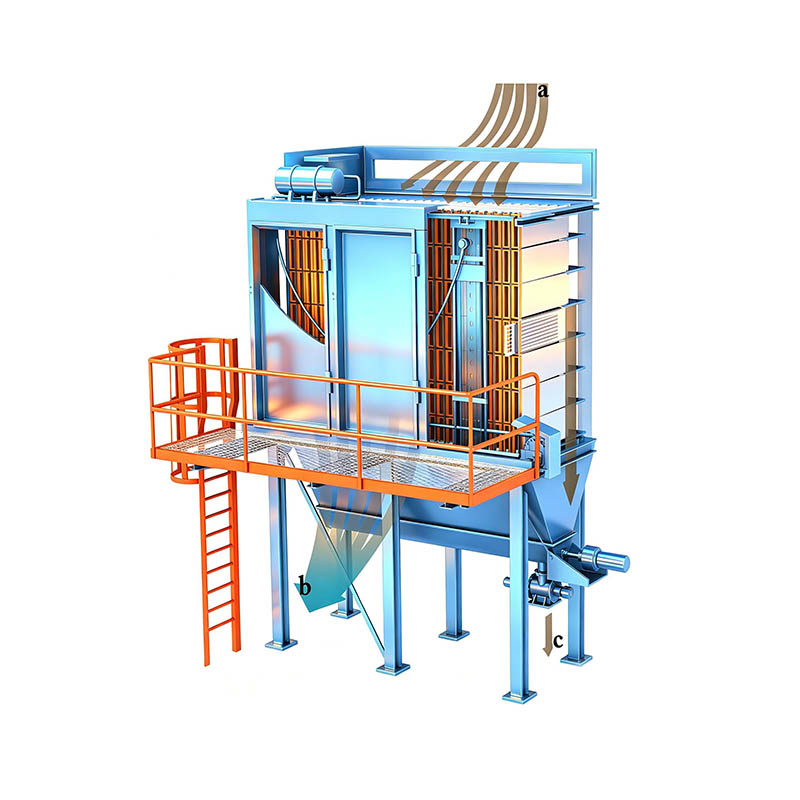
After pre-treatment, the gas enters the core separation device. Fabric filters, whether pulse-jet baghouse designs or pleated cartridge collectors, separate dust by trapping particles on the media while periodic reverse pulses of compressed air clean the surface. Cartridge collectors suit fine dust and applications with limited floor space; flat bag designs handle heavier dust loads and continuous operation in heavy industry.
Step 4: Final Gas-Phase Polishing
Mechanical filtration cannot remove solvent vapor or odor. When the process releases VOCs from coatings, inks or chemical reactions, the last stage of the system normally uses activated carbon adsorption, thermal oxidation or catalytic combustion. This stage also protects downstream equipment and helps the plant meet local odor and volatile organic compound limits.
Matching the Core Collector to the Pollutant Profile
The most common sizing error is choosing a collector based on airflow alone. Airflow defines how much gas must be handled, but not what the filter media must withstand. The logic below is typical.
| Pollutant profile | Recommended core technology | Key reason |
|---|---|---|
| Dry general dust with low moisture | Pulse-jet baghouse or cartridge collector | Low operational cost with high filtration efficiency |
| Fine metal fume and sub-micron smoke | Pleated cartridge collector with fine media | Large filtration area in a compact footprint |
| Explosive dust, such as aluminum or magnesium | Explosion-proof wet dust collector | Suppresses ignition and removes the dust with water |
| Acidic or corrosive gases | Wet scrubbing followed by demisting | Neutralizes the gas instead of only filtering particles |
| Solvent vapor and odor | Activated carbon adsorption or catalytic combustion | Treats the gaseous fraction that filters cannot catch |
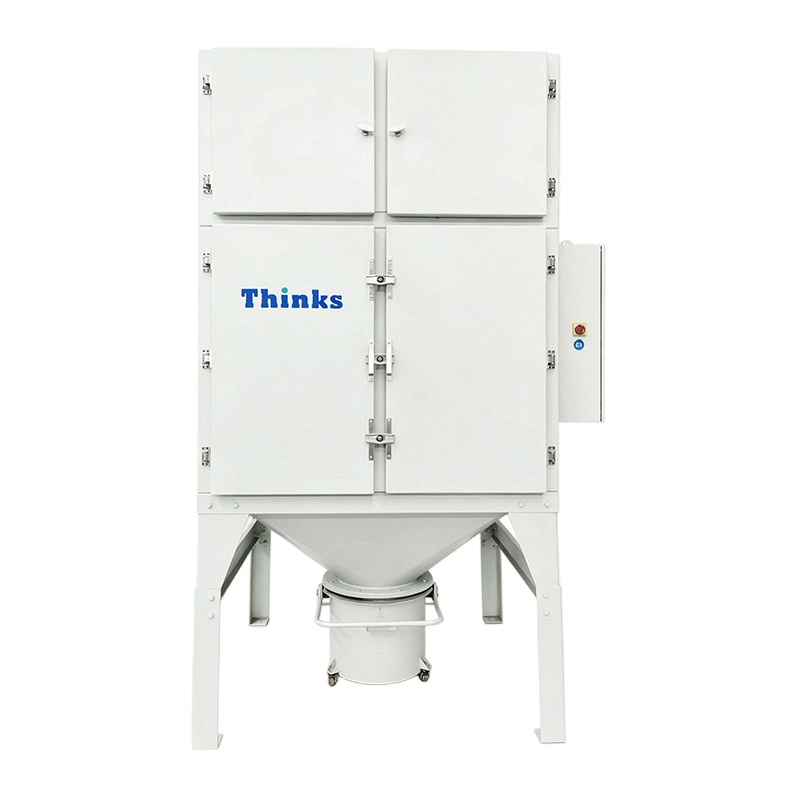
For dry particulate applications, the TMC series cartridge dust collector is a frequent choice because its pleated elements maximize filtration area per square meter of floor space and provide stable efficiency on fine dust. Where dust loads are heavy and the process runs continuously, flat bag collectors usually offer larger filter area and more straightforward maintenance access.
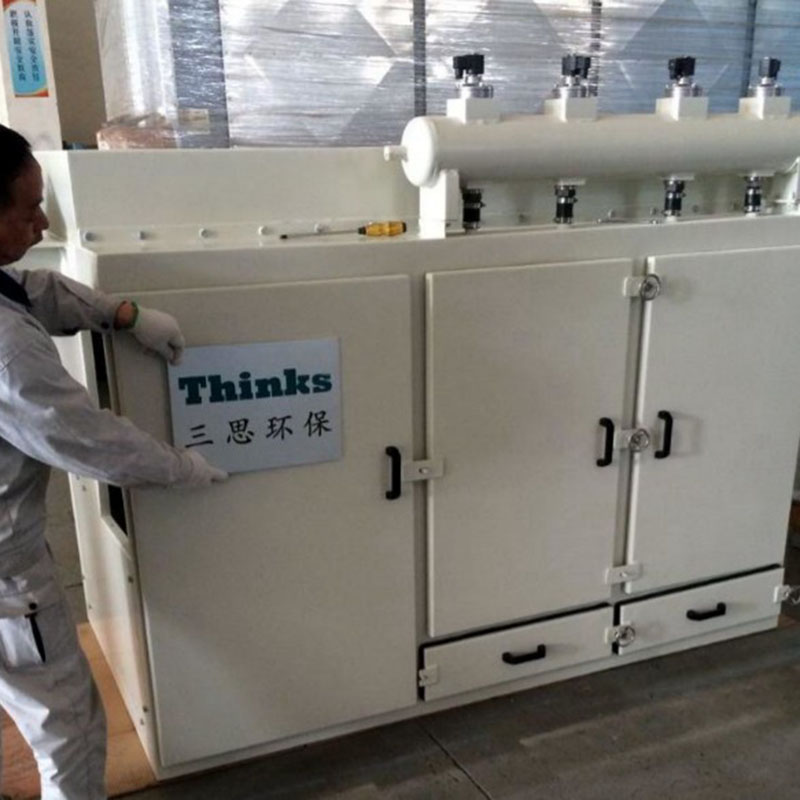 Wholesale TMC Series Cartridge Dust Collector Manufacturer, FactoryChangzhou Thinks Environmental Technology Co., Ltd is China Wholesale TMC Series Cartridge Dust Collector Manufacturer and OEM/ODM Factor...View Product →
Wet Collection for Explosive and Sticky Dust
Aluminum, magnesium and titanium dusts are especially hazardous because a spark inside a dry filter can ignite them. A wet collector avoids this risk by mixing the dust with water before any mechanical separation, and it also handles sticky or oily dusts that would blind fabric media.
Adsorption and Catalytic Solutions for VOC
For coating lines, lamination processes and solvent-heavy operations, an activated carbon adsorption desorption and catalytic combustion system concentrates a low-concentration VOC stream, then destroys the solvent at moderate temperature. This arrangement suits processes where solvent loads vary from hour to hour and continuous thermal oxidation would burn too much fuel.
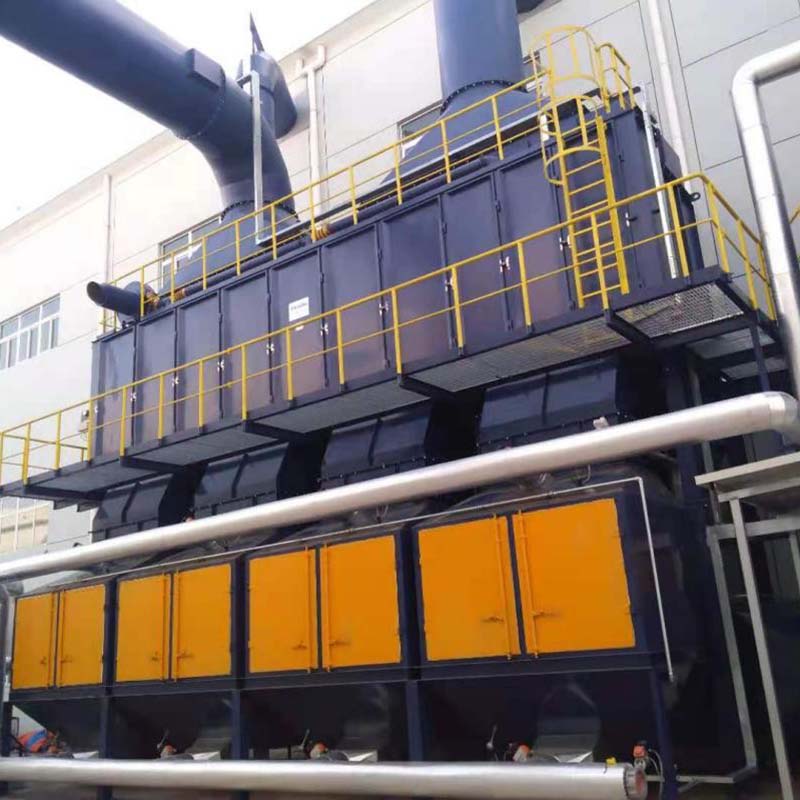 Wholesale Activated Carbon Adsorption, Desorption, and Catalytic Combustion SystChangzhou Thinks Environmental Technology Co., Ltd is China Wholesale Activated Carbon Adsorption, Desorption, and Catalytic Combustion S...View Product →
Industry-Specific Requirements
Every industry has a different balance of dust, temperature, corrosion and safety requirements, and that balance changes the optimal configuration.
Foundry, Steel and Metallurgy
Casting produces a combination of sand dust, metal fume, binder decomposition gases and frequent sparks at varying temperature. The capture design has to handle a wide load range, and spark protection should be considered non-negotiable. Foundry dust collection solutions built around pre-treatment and filtration stages match this specific profile.
Nonferrous Metal Processing
Aluminum recycling and copper production generate fine oxide fume, acidic gases and high outlet temperatures. These plants typically need an air cooler, tight fabric filtration and, where sulfur or chlorine compounds appear, a wet scrubbing stage for SO2 or HCl.
Chemical and Pharmaceutical Plants
Chemical processes can combine fine powders with flammable solvents in the same exhaust stream, so dust filtration and VOC abatement often belong in one line. Equipment selection must respect the explosion classification of the zone and any flameproof requirements from local regulators.
Packaging, Printing and New Energy
Flexo and gravure printing presses emit solvent vapor with very little dust, so an activated carbon system or oxidizer dominates the design. In new energy manufacturing, thermal treatment and coating steps create the same combination of particulate and VOC control needs, often with a demand for high equipment availability.
Selection Criteria That Drive Long-Term Cost
Temperature and Thermal Risk
Polyester bags are economical but fail above roughly 130°C in continuous service. If the gas temperature can exceed that range, install an air cooler or switch to heat-resistant media. The quality of the pulse-jet cleaning system and access for bag change affect lifecycle cost more than the initial purchase price of the bags.
Moisture and Condensation
When flue gas cools below its dew point, condensation wets the filter media and leads to mud-caking or corrosion. Insulated ducts, controlled gas temperature and condensate drains prevent this failure mode. Ignoring humidity is one of the most frequent causes of premature bag damage.
Explosion and Fire Safety
If the dust is combustible, the designer must identify its explosion class, size protection devices such as spark catchers, and consider wet collection for the most reactive metals. The relief or suppression system needs the same process data as the collector itself, so both should be designed together.
Energy and Maintenance
Compressed air for pulse-jet cleaning, fan power and filter replacement dominate the running budget. A system kept at a moderate differential pressure, usually below 1,500 Pa for cartridge collectors, consumes less energy and extends media life well beyond five years in stable processes.
Why a System Supplier Beats Stacking Components
A fume gas treatment system is only as good as its weakest interface. The transition from hood to duct, the gas distribution inside the collector housing, and the coordination between pre-treatment and separation are where most real-world performance losses happen. Buying each component separately makes those interfaces the customer's problem; working with a single system supplier with in-house engineering keeps them under one responsibility.
In practice, that supplier calculates duct velocities, selects filter media for the actual gas chemistry, specifies the safety devices, and provides commissioning, spare parts and scheduled maintenance. Application experience across foundries, nonferrous plants and chemical facilities reduces the chance of costly rework after installation.
Start with your real pollutant profile, the temperature range and the safety constraints of the process, and design the fume gas treatment system as one integrated chain. Then choose a supplier who can demonstrate application experience rather than only catalogue data. That order is the most reliable route to stable compliance, predictable operating costs and a workshop where operators can work safely. The system that performs best after five years is the one designed around the process, not the one assembled from parts.