English
 عربى
 Español
 中文简体

Content
- 1 How a Cartridge Dust Collector Filter Works
- 2 Matching Cartridge Filter Media to the Dust Stream
- 3 Three Performance Numbers That Matter on a Cartridge Dust Collector Filter
- 4 Maintaining Your Cartridge Dust Collector Filter: Pressure Drop and Media Care
- 5 Cartridge Filter vs. Baghouse: Which Approach Fits Your Plant?
- 6 Frequently Asked Questions
A powder-coating plant running 18,000 m³/h through a cartridge dust collector watched its differential pressure climb to 1.8 kPa within fourteen months, and faint fines began appearing at the outlet stack. The failure was not in the pulse system; it was a media mismatch. The stream carried sub-5-micron resin fines that lodged between the pleats, and the standard polyester media could not release them at the available cleaning pressure. Switching to a nanofiber-coated cartridge dust collector filter and lowering the air-to-cloth ratio brought the outlet emissions back below 1 mg/m³.
A cartridge dust collector filter is a cylindrical, pleated filter element installed inside a pulse-jet dust collector to capture dry particulate from industrial exhaust air. The pleats multiply the available media area, and each cleaning pulse briefly reverses the airflow to release collected dust into the hopper. This guide covers the working principle, media selection, the performance numbers that matter, and the maintenance habits that decide whether a filter bank lasts two years or five.
1.5 to 2.5 m/minTypical filtration velocity for pleated cartridge media, roughly 1.5 to 2 times higher than a conventional baghouse at the same emission target.
How a Cartridge Dust Collector Filter Works
A cartridge dust collector filter captures dust by building a thin cake across its pleated surface, then removing that cake with a short burst of compressed air while the collector remains online.
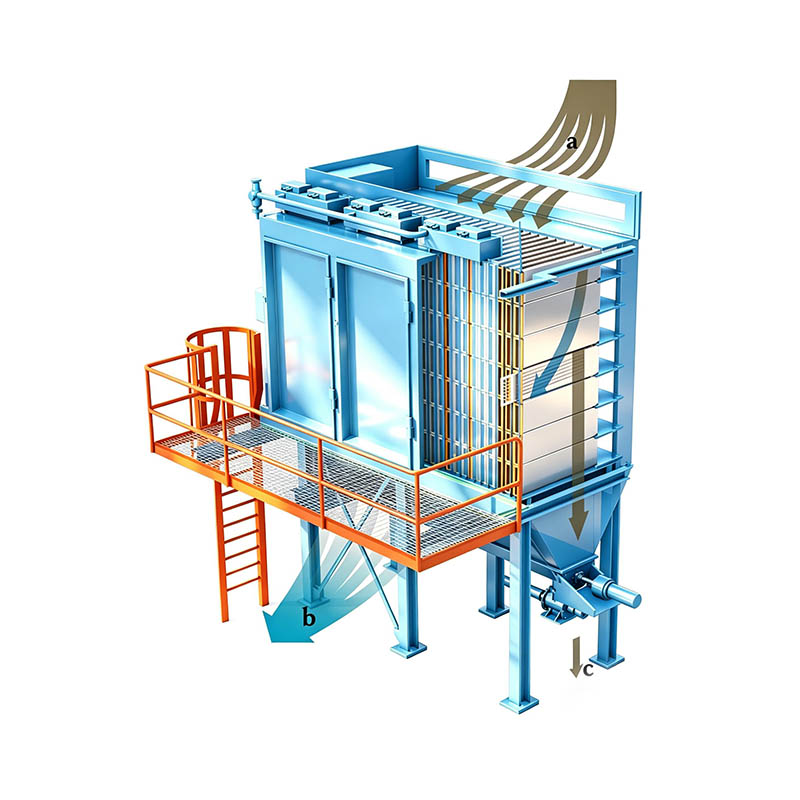
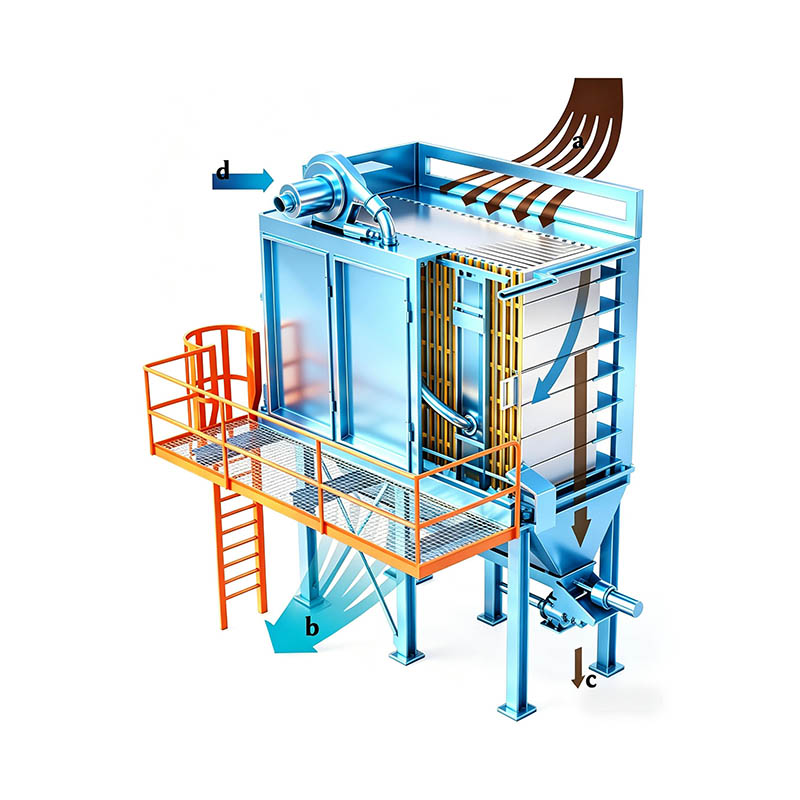
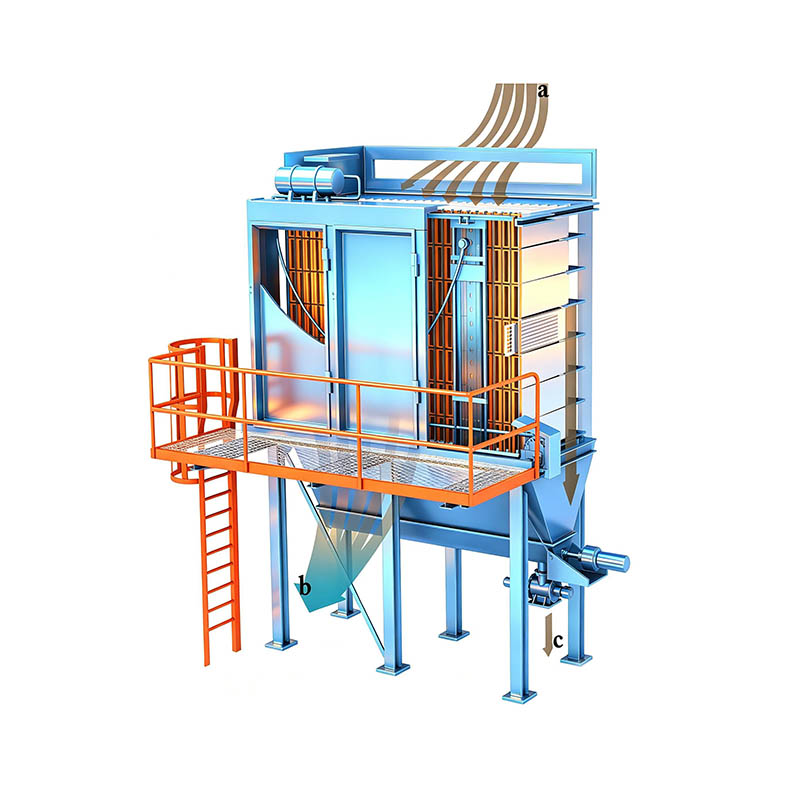
Contaminated air enters the hopper inlet and slows down, allowing coarse particles to drop out before the flow reaches the cartridges. The remaining fine fraction passes through the pleated media; particles deposit on the surface and form the filtration cake that performs most of the fine-particle capture. As the cake thickens, differential pressure rises. At a setpoint, usually 1.2 to 1.5 kPa, the pulse controller fires reverse air bursts of 0.4 to 0.6 MPa through the venturi nozzle, snapping the media outward and dropping the cake into the hopper.
A single 350 mm by 660 mm pleated cartridge provides roughly 20 to 25 m² of filtering area, depending on pleat count. That is why a cartridge dust collector filter supports a smaller footprint than a baghouse of equal airflow: fewer elements, less steel, and a lower fan load at the same velocity.
Definition: Air-to-cloth ratio is the inlet flow in cubic meters per hour divided by the total installed filter area in square meters. It is the first number a designer should check before selecting media.
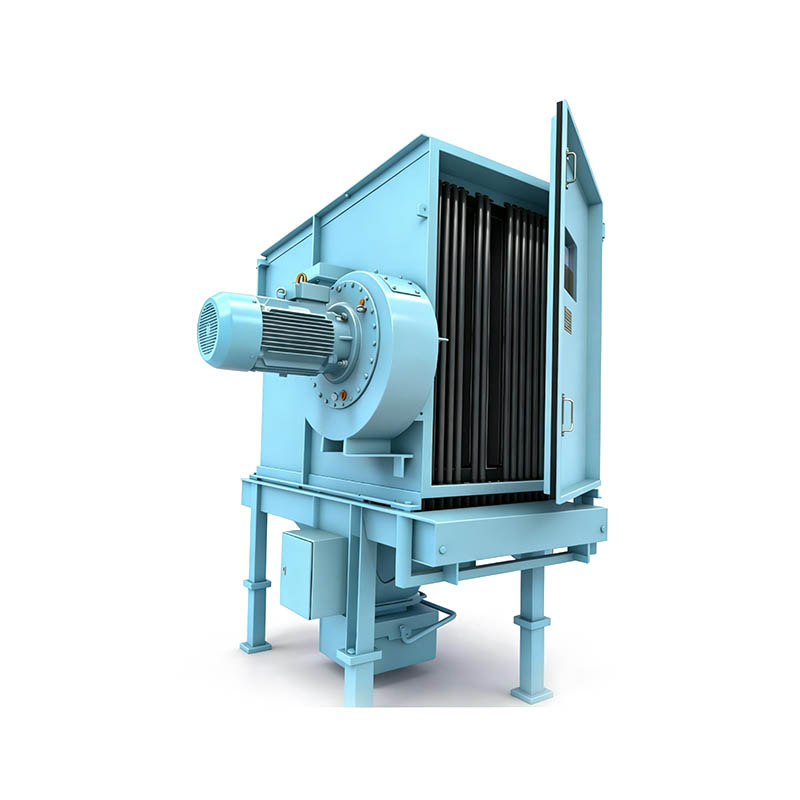
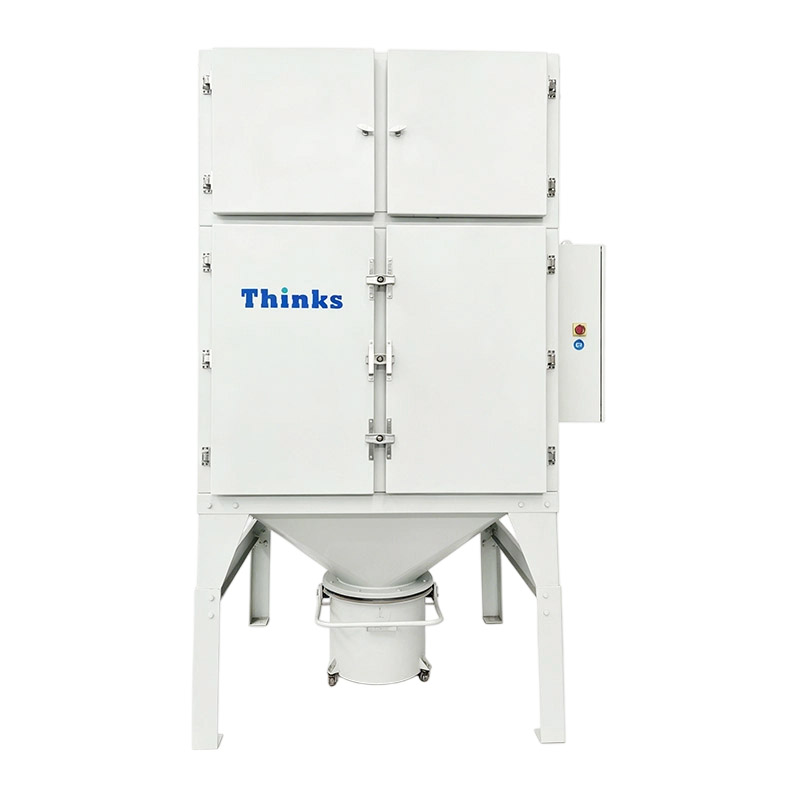
 TMC Series Cartridge Dust Collector for Low-Emission Industrial FiltrationDesigned for industrial dust removal, this modular collector achieves emissions below 5 mg/m³ while saving space. Its compact structure suits welding, cutting, and metal processing, making it relevant after checking air-to-cloth ratio.View Product →
Matching Cartridge Filter Media to the Dust Stream
Select a cartridge dust collector filter media in this order: operating temperature, moisture behavior, particle shape and abrasiveness, then the emission limit that local regulation requires.
Standard polyester handles dry mineral dust up to 135°C and is the lowest-cost choice for woodworking, grain, and general machining dust. If the gas is humid or the dust is sticky, a PTFE-coated or nanofiber surface prevents fines from bridging the pleats. Nanofiber media is the default when welding fume or metal oxides must stay below strict emission limits. For hot foundry or metallurgical exhaust, meta-aramid, PPS, or polyimide media extend the range to 200°C and beyond.
Moisture is the most common killer of a filter bank. Condensing vapor turns fine dust into a paste that plugs the lower pleats and cannot be dislodged by pulsing, so keep the collector and ductwork above the dew point whenever possible.
| Media type | Max continuous temp | Filtration velocity | Relative cost | Best suited for |
| Standard polyester needlefelt | 135°C | 1.0–1.5 m/min | Low | Dry mineral dust, wood dust, grain |
| Nanofiber-coated polyester | 120°C | 2.0–2.5 m/min | Medium | Fine metal oxides, welding fume, low emission targets |
| PPS | 190°C | 1.0–1.3 m/min | Medium-high | Sulfurous or coal-combustion exhaust |
| Meta-aramid | 200°C | 1.0–1.2 m/min | High | Foundry, aluminum, hot process gas |
| Polyimide | 240°C | 1.0–1.3 m/min | Very high | Fine irregular dust at high temperature |
Maximum continuous operating temperature by media type
When the process generates sparks, from grinding, plasma cutting, or furnace charging, a spark catcher mounted ahead of the collector uses inertial separation to pull burning particles out of the airstream before they reach the media. Its cost is far below replacing a full bank of cartridges after an ember fire.
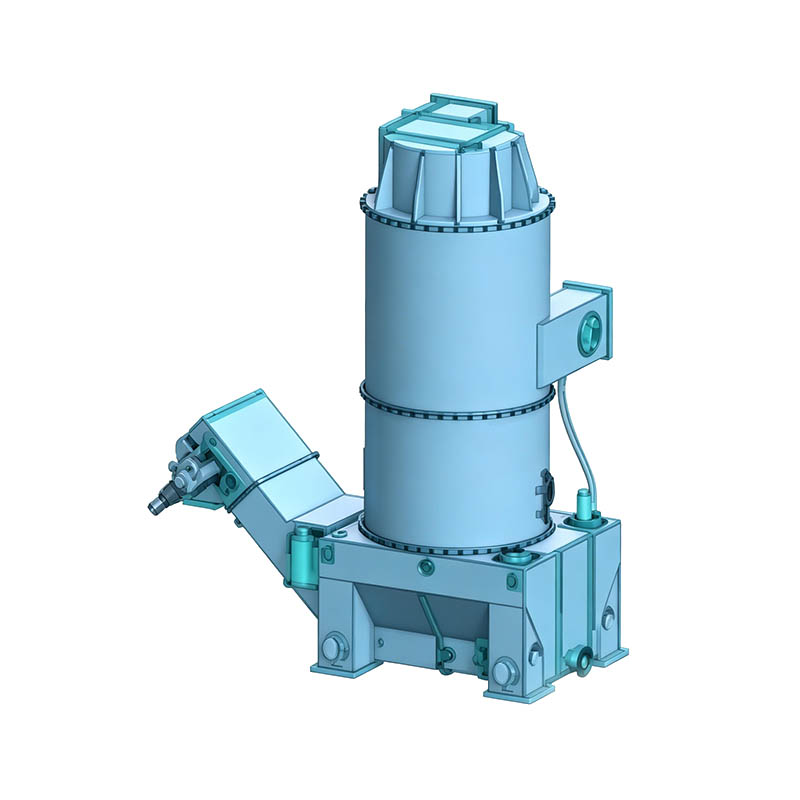
 Spark Arrestor for Protecting Dust Collection Systems from Hot ParticlesThis device separates sparks and high-temperature particles before they reach filter media, reducing resistance and energy use. It extends filter bag life and stabilizes system operation, essential where grinding or cutting generates sparks.View Product →
Three Performance Numbers That Matter on a Cartridge Dust Collector Filter
Filtration velocity, differential pressure, and outlet emission concentration are the three figures that determine whether a cartridge dust collector filter meets compliance and stays affordable to run.
Filter life follows these numbers. Run velocity above the media rating and the pleats load unevenly; run it far below and you have over-invested in filter area. A differential pressure below 1.0 kPa after cleaning indicates a healthy collector; if it cannot recover under 1.0 kPa, the media is saturated or the pulse system is failing. Outlet emission concentration, measured with a portable particulate analyzer, tells you when fines are breaking through before visible dust appears.
1.5–2.5 m/minNormal filtration velocity for pleated media; 0.8–1.2 m/min for hot-gas specialty media.
1.2–1.5 kPaTypical pulse-clean trigger point; replace media if recovery stalls above 1.0 kPa.
0.4–0.6 MPaEffective pulse-air pressure with a supply line kept near 0.5–0.6 MPa for consistent cleaning.
Track these three values weekly. A gradual increase in the cleaning frequency, from once per hour to once every fifteen minutes, is an early sign that the dust load has changed or the media is degrading.
Maintaining Your Cartridge Dust Collector Filter: Pressure Drop and Media Care
A planned maintenance routine, not emergency replacement, keeps a cartridge dust collector filter at design efficiency and normally delivers two to five years of media life.
- Record differential pressure after every cleaning cycle; a slow recovery is the earliest warning.
- Inspect pulse valves and diaphragm housings quarterly; leaking valves waste compressed air and starve the media of cleaning energy.
- Check for condensation on hopper walls and cartridge bottom pleats after shutdowns.
- Confirm the hopper discharge and rotary valve seal are airtight; air leaks re-entrain collected dust.
- Measure outlet emissions with a manual particulate test before every filter-change decision.
- Replace cartridges in sets, not one by one, to keep face velocity even across the collector.
For plants without a dedicated maintenance crew, a scheduled service contract with Changzhou Thinks Environmental Technology Co., Ltd. covers compressed-air audits, pulse-valve checks, and filter replacement planning.
Rule of thumbIf a cartridge dust collector filter cannot self-clean back below 1.0 kPa after two consecutive pulse cycles, the media is saturated. Replacement is usually cheaper than the energy lost to a permanently high pressure drop.
Cartridge Filter vs. Baghouse: Which Approach Fits Your Plant?
Choose a cartridge dust collector when the dust is fine, dry, and non-abrasive and floor space is tight; choose a baghouse when airflow is very high, gas temperature is above 140°C, or dust is coarse and abrasive.
Choose cartridge when
- Fine submicron dust, welding fume, or powder-coating fines dominate the stream
- Space or weight limits the collector footprint
- Emission targets below 5 mg/m³ require fine surface media
- Airflow is moderate and media changes can be scheduled
Choose baghouse when
- Airflow exceeds roughly 50,000 m³/h with high dust load
- Gas temperature stays above 140°C for long periods
- Dust is abrasive and would erode pleated media quickly
- Continuous process availability outweighs compact footprint
This condensed comparison is a fast engineering shortcut. For the full decision logic, including cost per filtered m³/h and replacement intervals, see our detailed cartridge vs. baghouse comparison.
Frequently Asked Questions
How often should a cartridge dust collector filter be replaced?
Media life typically spans two to five years in dry, non-abrasive service. Replace cartridges when differential pressure cannot recover below 1.0 kPa after cleaning, when outlet emission concentration rises above your permit limit, or when physical damage appears at the pleat edges.
What efficiency can a cartridge dust collector filter achieve?
With a well-sealed collector and high-grade pleated media, a cartridge dust collector filter captures more than 99.9% of particles above 0.5 µm. Fine-surface media commonly reaches equivalent MERV-15 to MERV-16 performance on metal oxides and welding fume.
Can a cartridge dust collector handle high-temperature gas?
Standard polyester is limited to roughly 135°C, while media such as meta-aramid and polyimide extends operation to 200–240°C. Above that range, cool the gas first with dilution air or an air-to-air cooler, or switch to a baghouse with heat-tolerant fabrics.
What is the main difference between a cartridge filter and a baghouse?
Pleated cartridge media provides 1.5 to 2 times higher filtration velocity and a much smaller footprint than a baghouse, but baghouses handle higher volumes, coarser and more abrasive dust, and temperatures above 140°C more economically over a long service interval.