English
  عربى
عربى  Español
  中文简体
中文简体

Content
- 1 Structural Integrity and Frame Assessment
- 2 Filter Bag Media Performance and Replacement Scheduling
- 3 Pulsed Jet Cleaning System Optimization
- 4 Operational Parameters Impacting Maintenance
- 5 Environmental and Safety Considerations
- 6 Integration with Industrial Systems
- 7 Performance Comparison of Filter Bag Media
- 8 FAQs
- 9 References
Structural Integrity and Frame Assessment
- Inspect the baghouse casing for corrosion, weld cracks, and structural deformation using ASTM A36/A516 standards.
- Check flange connections, gaskets, and fasteners for compression set or material fatigue; verify compliance with ISO 9001 tolerances.
- Evaluate support frames and vibration mounts for mechanical fatigue, particularly under cyclic loading in steel and non-ferrous metal operations.
Filter Bag Media Performance and Replacement Scheduling
- Monitor filter bag media differential pressure; sustained ΔP above 2000–2500 Pa indicates media clogging or pleat collapse.
- Determine replacement intervals based on dust loading rates, particle size distribution, and chemical exposure.
- Compare synthetic (PTFE, polyester) vs. cellulose-based bags for tensile strength, burst pressure, and temperature resistance up to 180°C.
- Implement preventive replacement when filtration efficiency drops below 95% for sub-micron particulates.
Pulsed Jet Cleaning System Optimization
- Check solenoid valves, diaphragm actuators, and air headers for correct pressure (6–7 bar) and pulse duration compliance.
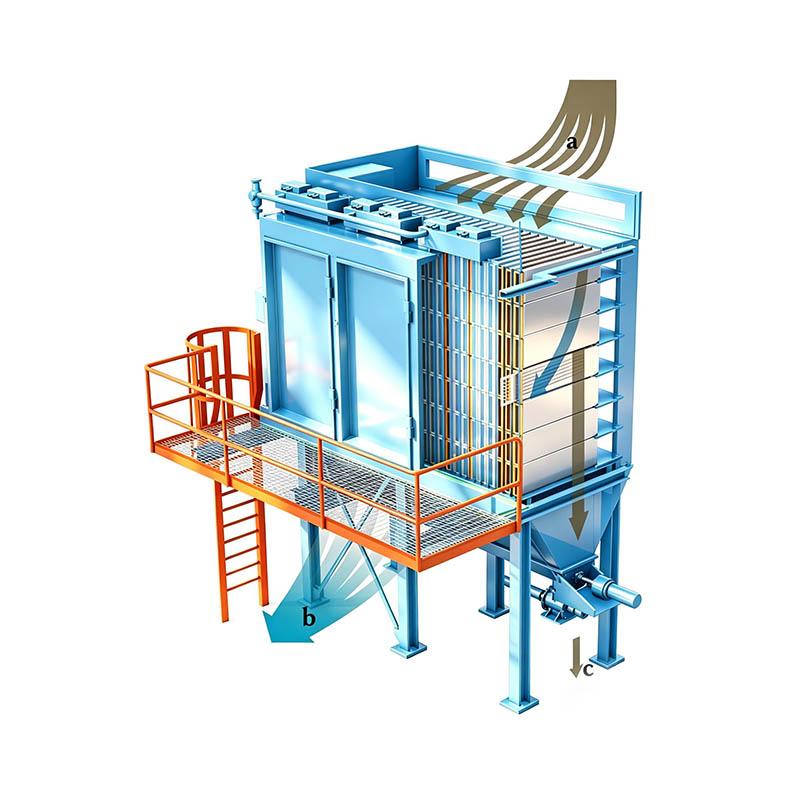
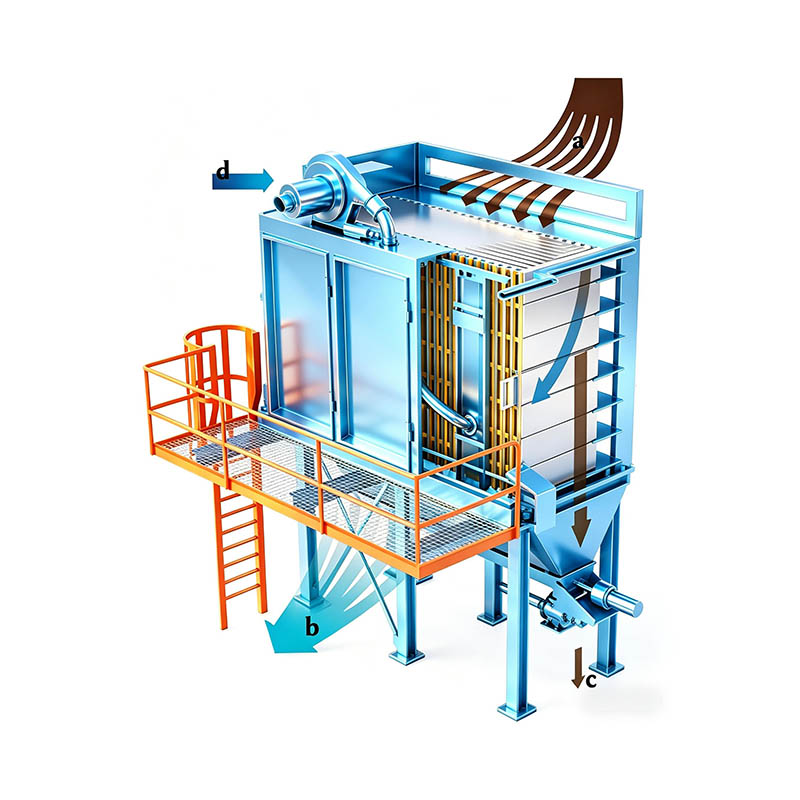
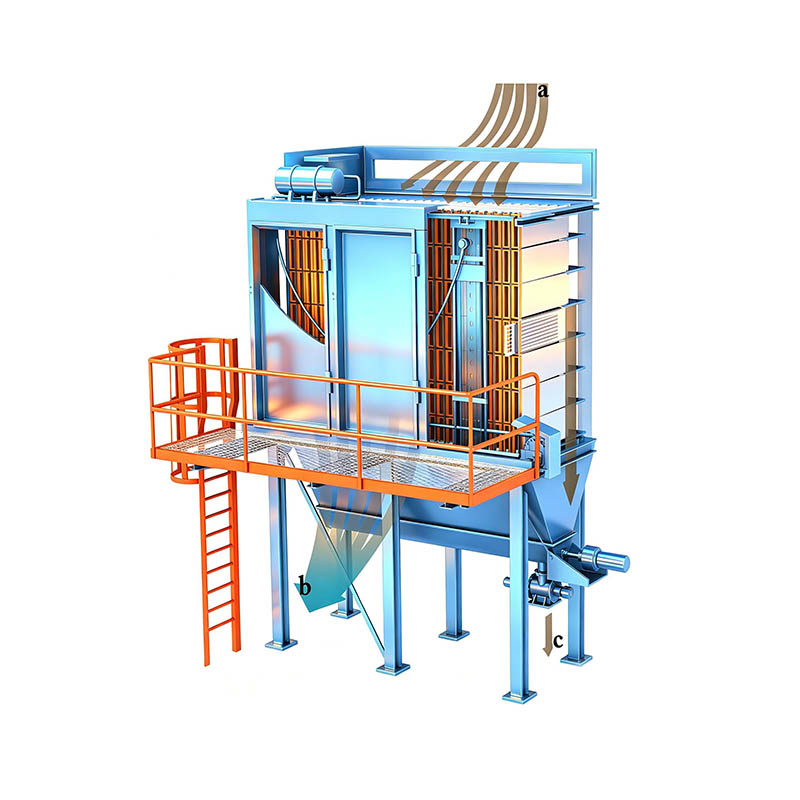
- Verify that the pulse jet cleaning mechanism provides uniform cleaning across all bags to prevent uneven wear.
- Track compressed air consumption and pulse frequency to ensure consistent ΔP and reduce stress on bag media.
Operational Parameters Impacting Maintenance
- Monitor differential pressure trends and use predictive maintenance to schedule media replacement efficiently.
- Document dust characteristics including particle morphology, moisture content, and chemical composition.
- Adjust air-to-cloth ratio based on load; for high dust density applications, maintain air velocity between 1.2–1.5 m/s to prevent bag collapse.
Environmental and Safety Considerations
- Ensure collected dust handling meets OSHA and MSDS requirements for hazardous particulates.
- Verify explosion venting and suppression systems are functional for combustible dust scenarios.
- Implement sealing and leak detection during maintenance to avoid fugitive emissions.
Integration with Industrial Systems
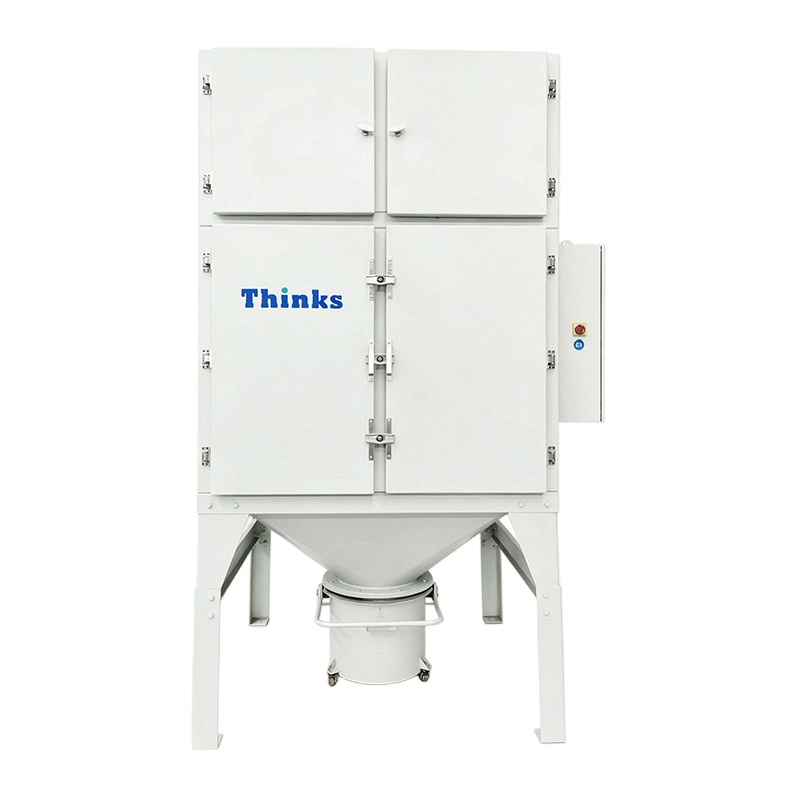
- Use industrial baghouse dust collector systems with optimized filter bag selection for specific industrial sectors.
- Apply in steel, casting, chemical, non-ferrous metals, packaging, printing, pharmaceuticals, and new energy industries.
- Integrate monitoring systems to track operational parameters and schedule timely maintenance to minimize downtime.
Performance Comparison of Filter Bag Media
- PTFE: Maximum temperature 180°C, filtration efficiency ≥99.9%, chemical resistance high, tensile strength 350 N/cm.
- Polyester: Maximum temperature 120°C, filtration efficiency 95–98%, moderate chemical resistance, tensile strength 300 N/cm.
- Nomex Aramid: Maximum temperature 220°C, filtration efficiency 98–99%, high chemical resistance, tensile strength 400 N/cm.
| Media Type | Max Temperature | Filtration Efficiency | Chemical Resistance | Tensile Strength |
| PTFE | 180°C | ≥99.9% | High | 350 N/cm |
| Polyester | 120°C | 95–98% | Moderate | 300 N/cm |
| Nomex Aramid | 220°C | 98–99% | High | 400 N/cm |
FAQs
- Q1: How often should filter bags be replaced?
A1: Replacement depends on dust type, particle size, and bag material. PTFE media may last 3–5 years; polyester bags 1–3 years. Regular monitoring is recommended. - Q2: Can industrial baghouse dust collectors handle high-temperature dust?
A2: Yes, using Nomex Aramid or PTFE-coated bags for temperatures up to 220°C and chemical exposure. - Q3: How does pulse jet cleaning affect bag longevity?
A3: Proper pulse duration and frequency maintain uniform ΔP, reducing mechanical stress and extending bag service life. - Q4: What operational factors most impact maintenance intervals?
A4: Differential pressure, air-to-cloth ratio, dust load, moisture content, and chemical composition. - Q5: Are baghouse systems suitable for multiple industries?
A5: Yes, they are applied in steel, casting, chemical, packaging, printing, pharmaceuticals, and new energy sectors.
References
- ASTM A36/A516 – Carbon Steel Pressure Vessel Plates
- ISO 9001:2015 – Quality Management Systems Requirements
- OSHA 1910.22 – Housekeeping and Dust Control