English
 عربى
 Español
 中文简体

Content
- 1 What Is an Explosion Proof Wet Dust Collector?
- 2 How an Explosion Proof Wet Dust Collector Suppresses Combustion
- 3 Explosion Proof Wet Dust Collector vs Dry Dust Collector: Direct Comparison
- 4 Selection Parameters for an Explosion Proof Wet Dust Collector
- 5 Safety Standards and Compliance for Explosion Proof Wet Dust Collectors
- 6 Explosion Proof Wet Dust Collector FAQ
A grinding cell finishing aluminum housings produces a fine metallic dust that settles on every beam, cable tray and filter pocket in the room. One stray spark inside a dry dust collector is enough to turn that accumulated fuel into a deflagration. The U.S. Chemical Safety Board recorded 281 combustible dust incidents between 1980 and 2005 that killed 199 workers, and metal dust was a contributing factor in roughly a third of them. An explosion proof wet dust collector removes the fuel-and-ignition pairing entirely: it draws contaminated air through water, quenches incoming sparks at the inlet, and keeps captured particles submerged so they cannot re-entrain or detonate. For facilities handling aluminum, magnesium, titanium or other high-Kst powders, wet collection is a risk-control requirement, not an accessory.
What Is an Explosion Proof Wet Dust Collector?
An explosion proof wet dust collector is a dust separation system that uses water as both the filtering and the inerting medium, with its motor, fan, electrical enclosures and safety interlocks certified for explosive dust atmospheres.
Contaminated air enters the collector through a side inlet and is directed toward the water bath or a high-pressure spray zone. Dust particles are wetted, agglomerate, and sink into the sludge tank; clean air passes through a mist eliminator before returning to the workshop. Because the captured dust never forms a dry layer, the vessel cannot hold the fuel-air mixture required for a secondary explosion.
Which dusts force the switch to wet collection
- Aluminum, magnesium and their alloys in grinding, sanding, polishing and blasting
- Titanium, zirconium and other reactive metal fines
- Carbon, graphite and certain thermoplastic powders
- Hybrid mixtures where metal fines combine with oil mist or solvent vapor
These dusts are characterized by Kst values that routinely exceed 200 bar-m/s, and aluminum dust can exceed 300 bar-m/s in common particle size distributions. At that reactivity, the filter media of a dry collector becomes a fuel surface with a built-in ignition source. A detailed walkthrough of the operating principle is available in our explosion proof wet dust collector guide.
The mechanical rule is simple: if the dust is combustible and the process generates sparks, wet collection attacks the fuel side of the fire triangle instead of trying to contain the consequences.
How an Explosion Proof Wet Dust Collector Suppresses Combustion
Suppression happens in three places, at the inlet, inside the water contact zone, and inside the sludge tank, and none of them can hold an ignition-capable dust-air mixture.
- Capture: hood face velocity of 0.5 to 1.5 m/s draws fine particles into the inlet duct without letting them settle.
- Quenching: incoming sparks hit the water surface or spray curtain and cool below ignition temperature in milliseconds.
- Separation: particles collide with water droplets, gain mass, and settle; the air path turns upward into the eliminator.
- De-misting: a chevron or mesh eliminator strips entrained droplets so the exhaust air stays within humidity limits.
- Sludge removal: settled solids are raked, pumped or discharged in batches for dewatering and disposal.
What makes the system explosion proof
- ATEX- or IECEx-certified motor, fan and electrical enclosures for the classified zone
- Low-water level interlock that shuts down the fan before the water seal can be lost
- Continuous grounding across all duct flanges and access doors
- Tank geometry that prevents dry dust bridges and hydrogen accumulation in reactive-metal service
- Explosion isolation valves on long duct runs where the hazard analysis requires them
The collector is certified as a system, not as a sum of parts. An explosion proof label on the motor alone does not make the unit safe; the fan, duct, water loop, sludge discharge and damper control must share the same protection concept.
Explosion Proof Wet Dust Collector vs Dry Dust Collector: Direct Comparison
For combustible dust streams, wet collection wins on ignition safety in nearly every scenario; dry collectors become competitive only when the dust is non-combustible or fully inerted before the filter.
| Attribute | Explosion proof wet collector | Dry collector (baghouse or cartridge) |
| Separation medium | Water bath or high-pressure spray | Filter bags or pleated cartridges |
| Fuel accumulation | Particles stored wet and inert | Dry dust layer on media is deflagration fuel |
| Spark handling | Quenched at the inlet | Spark trap, abort gate and isolation required |
| Secondary explosion risk | Minimal, no dry dust reservoir | Requires vents, suppression or containment |
| Captured material | Pumpable sludge or slurry | Dry powder in a hopper |
| Utility demand | Water circulation plus sludge disposal | Compressed air for pulse cleaning |
| Maintenance focus | Water level, eliminator, sludge tank | Filter cleaning, bag replacement |
| Best-fit processes | Grinding, polishing, AM powder, reactive metals | Non-combustible dust in stable processes |
Where wet collection is mandatory
Choose a wet explosion protection concept for processes that combine combustible fines with an ignition source.
- Metal grinding, sanding and buffing with combustible fines
- Additive manufacturing powder handling and post-processing
- Magnesium and titanium machining with hot chips
- Dust streams mixed with oil mist or solvent vapor
Where dry collection survives
A dry filter remains a defensible option when the analysis proves the dust cannot sustain deflagration.
- Non-combustible dusts such as gypsum and limestone
- Water-reactive chemicals in humidity-sensitive processes
- Installations with no water supply or freezing risk
A dust hazard analysis decides the question. NFPA 652 in the United States and equivalent risk assessments in the European Union require the owner to document why the chosen technology is safe for the specific dust and process.
Selection Parameters for an Explosion Proof Wet Dust Collector
Five measurable inputs determine the right unit: capture airflow, dust reactivity, water availability, sludge logistics, and the classified zone around the equipment.
- Capture airflow (m3/h), summing the hood face velocities and transport velocities from every pick-up point
- Dust reactivity (Kst and Pmax), from a certified sample test of the actual process powder
- Water flow and pressure, to maintain the designed water-to-air ratio during peak dust load
- Sludge handling, including dewatering, storage and disposal as hazardous waste if required
- Zone classification and access space, for ATEX enclosure selection and tank service clearance
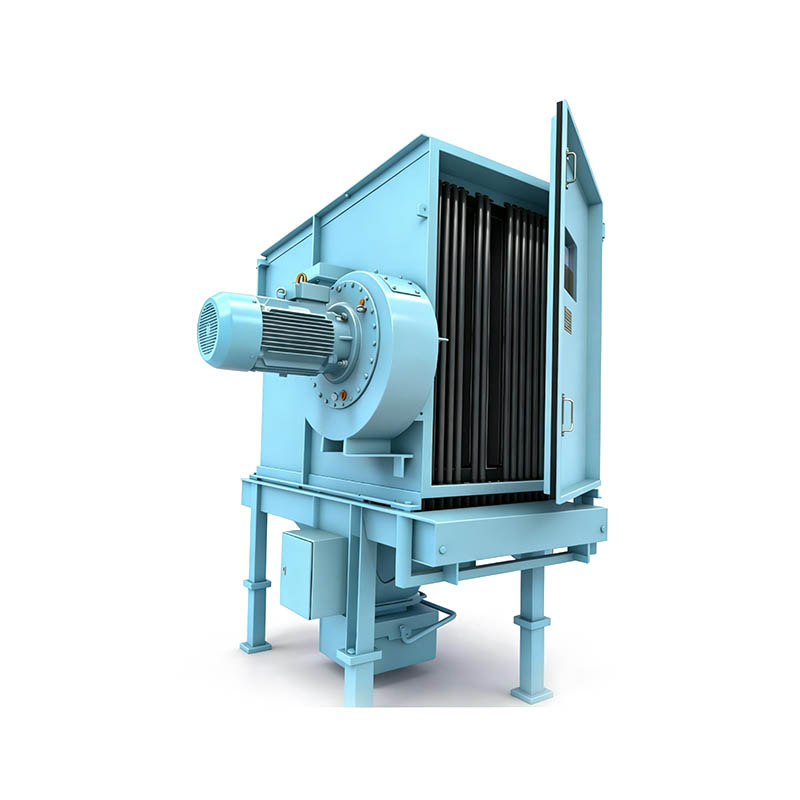
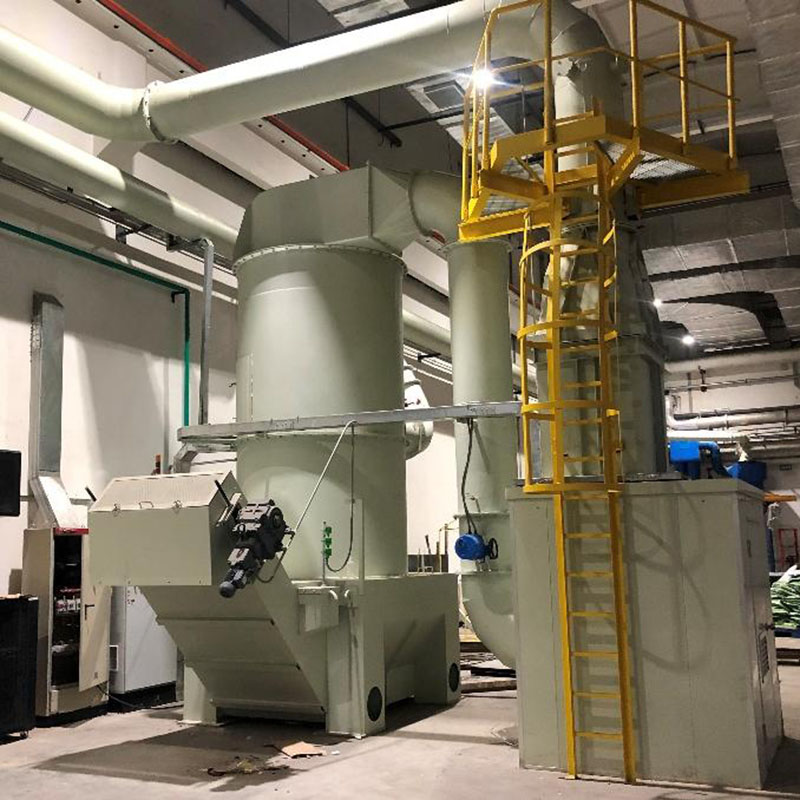 TVC Series Explosion-Proof Wet Dust Collector with Continuous Sludge DischargeThis skid-mounted wet dust collector uses a submerged-suction inlet and ATEX-rated ventilation for hazardous dust. Its scraper groove enables online sludge removal, with low-water and airflow alarms ensuring safe automated operation.View Product →
Changzhou Thinks Environmental Technology Co., Ltd. packages these parameters into the TVC series explosion proof wet dust collector, a skid-mounted unit that combines a submerged-suction inlet, ATEX-rated ventilation group, low-water interlock and sludge outlet sized for continuous shift operation.
98%typical collection efficiency on metal grinding fines
200+Kst threshold, in bar-m/s, above which wet collection is the common recommendation
1.5 m/srecommended maximum face velocity at open grinding hoods
3:1water-to-dust volume ratio for pumpable sludge in metal applications
Do not size a wet collector from the number of machines alone. Two identical grinding booths can require different units if one runs aluminum with a continuous water curtain and the other produces only occasional steel fines.
Safety Standards and Compliance for Explosion Proof Wet Dust Collectors
Compliance is demonstrated by a dust hazard analysis (DHA) that matches the collector's protection concept to the specific Kst, particle size, zone classification and process conditions, not by purchasing a labeled box.
- NFPA 652, which mandates a DHA for every facility handling combustible particulate solids in the United States
- NFPA 69, covering explosion prevention and isolation methods
- ATEX Directive 2014/34/EU, governing certified equipment for zones 21 and 22 in the European Union
- EN 14491 and EN 15089, defining venting and isolation system design
- GB 15577 in China, with its own combustible dust safety requirements
A correctly specified wet collector also removes several mechanical failure points that dry collectors introduce, such as deflagration vents, rotary valve maintenance and filter cake ignition after pulse cleaning. For a plant-level view of how wet collectors sit inside a wider emission control strategy, see our industrial dust control solutions for manufacturing facilities.
The most common compliance failure is the interface, not the collector: ducting without grounding, a missing low-water interlock, or a fan motor replaced with a non-certified spare. Treat the DHA as a living document and the wet collector as a safety system with its own maintenance schedule.
Explosion Proof Wet Dust Collector FAQ
Is an explosion proof wet dust collector required for aluminum grinding?
Yes for most aluminum finishing operations. Aluminum dust commonly has a Kst above 300 bar-m/s, and a dust hazard analysis will almost always conclude that the filter vessel of a dry collector is an unmitigated explosion hazard. Wet collection removes the dry fuel reservoir, which is why it is the default recommendation.
Can a wet dust collector handle magnesium dust, which reacts with water?
Yes, with controlled water chemistry and sludge management. Magnesium reacts with water to release hydrogen, so the collector must be ventilated, the sludge must not be allowed to dry inside the tank, and the slurry should be discharged in batches. Vendors that build wet collectors can add hydrogen monitoring and a dedicated sludge handling procedure for this duty.
What is the operating cost difference between wet and dry collection?
Wet collectors replace filter media cost with electricity for the circulation pump, water consumption and sludge dewatering labor. For a single grinding booth the difference is moderate; for centralized multi-station systems, sludge logistics dominate the total. Ask the vendor for the water-to-air ratio and expected sludge volume before comparing quotes.
Does an explosion proof wet dust collector still need explosion vents?
It depends on the DHA results and local codes. Many wet collector designs are inherently inert, so no vent is required; installations with long duct runs may still need explosion isolation valves to stop flame propagation back to the process. Venting alone, without water inerting, is not equivalent protection.
When you compare quotations, ask the vendor to confirm the Kst value used in the design, the fan motor certification, the low-water interlock response time and the sludge discharge interval. These four answers separate a real explosion protection concept from a painted housing.