English
 عربى
 Español
 中文简体

Content
- 1 What Counts as Air Pollution Control Equipment
- 2 Matching Air Pollution Control Equipment to the Pollutant
- 3 Capture Velocity: The Number That Decides Whether the System Works
- 4 Selection Criteria That Drive Total Cost of Ownership
- 5 Explosive Dust, Oil Mist and VOC Streams Follow Different Rules
- 6 How to Verify Air Pollution Control Equipment Performance
- 7 Frequently Asked Questions
Two cartridge collectors rated at the same 20,000 m3/h sit side by side in a die-casting plant. One holds stack emissions below 10 mg/m3 for three years. The other drifts past 25 mg/m3 within eighteen months. The housings, fan curves and filter media are interchangeable, which is exactly why air pollution control equipment cannot be selected from a catalogue page. What differed was the specification work completed before the purchase order: the capture point, the air-to-media ratio, and the behaviour of the dust itself.
What Counts as Air Pollution Control Equipment
Working definition
Air pollution control equipment is the engineered chain of capture, conveyance, separation and post-treatment devices that removes particulate, mist or gaseous pollutants from an industrial airstream before it leaves the stack or returns to the workspace.
Buyers usually price one unit at a time, a baghouse here, a scrubber there, while the compliance result depends on the whole chain. A filter rated at 99.9 percent removal sitting behind a hood that captures 60 percent of the fume still releases 40 percent of the pollutant into the shop, and every downstream stage is then sized against the wrong duty point.
- Capture. Hoods, enclosures and extraction arms that pull contaminants away from the breathing zone.
- Conveyance. Ductwork, dampers and the fan that keeps captured dust suspended.
- Separation. Bags, cartridges, cyclones and wet scrubbers that strip particulate from the gas stream.
- Post-treatment. Carbon adsorbers, catalytic oxidizers and polishing filters for gases the primary stage cannot hold.
Most industrial projects combine at least three of these stages, and the interfaces between them are where designs fail. A correctly sized collector fed by an undersized duct simply runs below its nameplate flow.
Matching Air Pollution Control Equipment to the Pollutant
The physical form of the pollutant decides the equipment family before budget, footprint or supplier preference enters the discussion. Dry free-flowing dust, sticky condensable fume, oil aerosol and solvent vapour behave differently in a duct and fail differently inside a filter.
| Pollutant | Typical source | Matched equipment | Deciding parameter |
| Dry metal dust | Grinding, blasting, polishing | Cartridge or bag collector | Air-to-media ratio, dust loading |
| Hot process fume | Foundry melting, steel conversion | Flat bag collector with pre-cooling | Inlet temperature, acid dew point |
| Oil mist and coolant aerosol | CNC machining, cold forming | Coalescing oil mist processor | Mist concentration, droplet size |
| Combustible dust | Aluminium, magnesium, sugar handling | Explosion-vented or wet collector | Kst, Pmax, minimum ignition energy |
| Solvent vapour | Coating, printing, pharmaceutical | Carbon adsorption or catalytic oxidation | Concentration, LEL margin, solvent mix |
| Acid gas | Pickling, battery, chemical processing | Wet scrubber | Gas flow, reagent choice, pH control |
Melting and pouring operations show why this matters. Foundry fume leaves an induction furnace at roughly 200 to 600 degrees Celsius and carries fine, often hygroscopic particulate that blinds media when it arrives hot or wet. A flat bag collector fed through a pre-cooling stage and a spark catcher behaves very differently from a cartridge unit mounted on the furnace canopy.
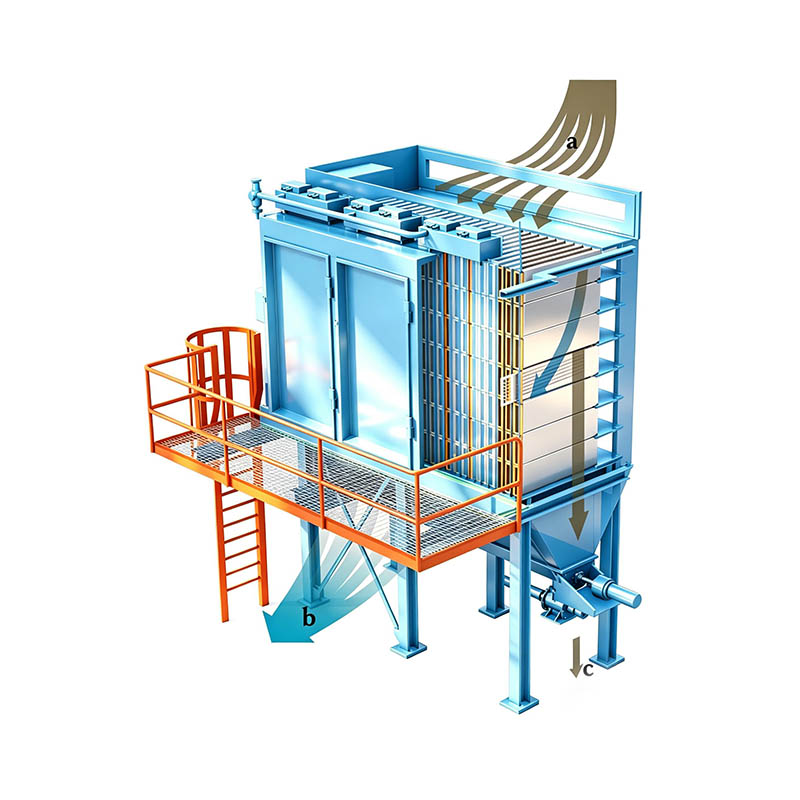
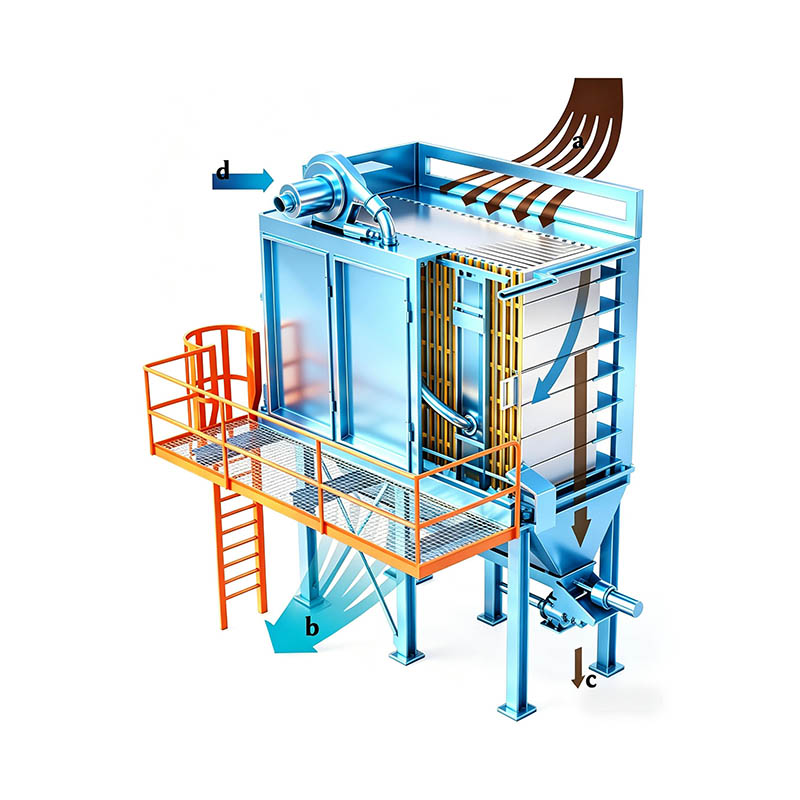
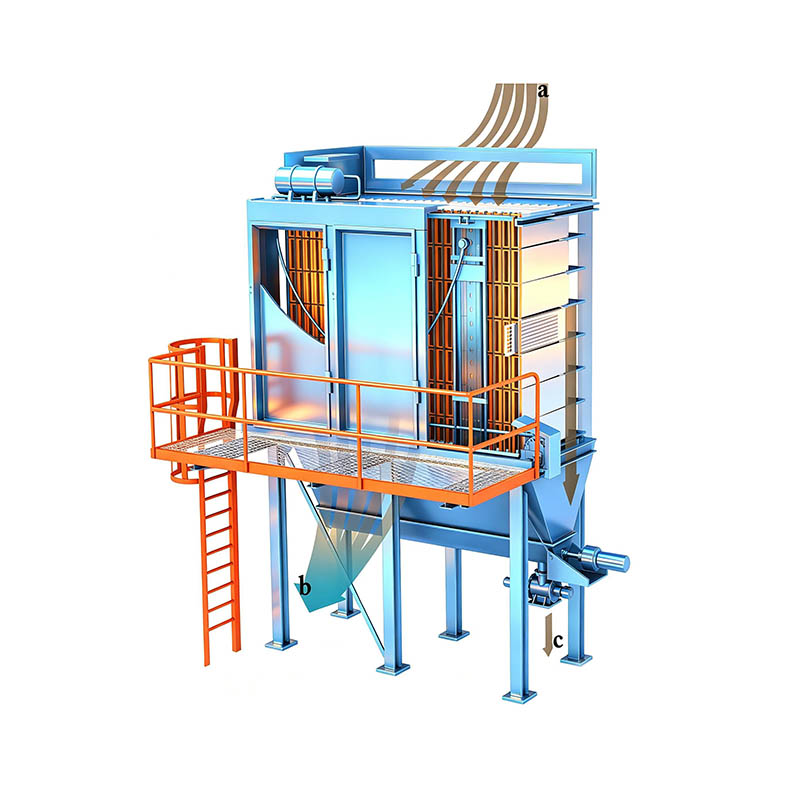
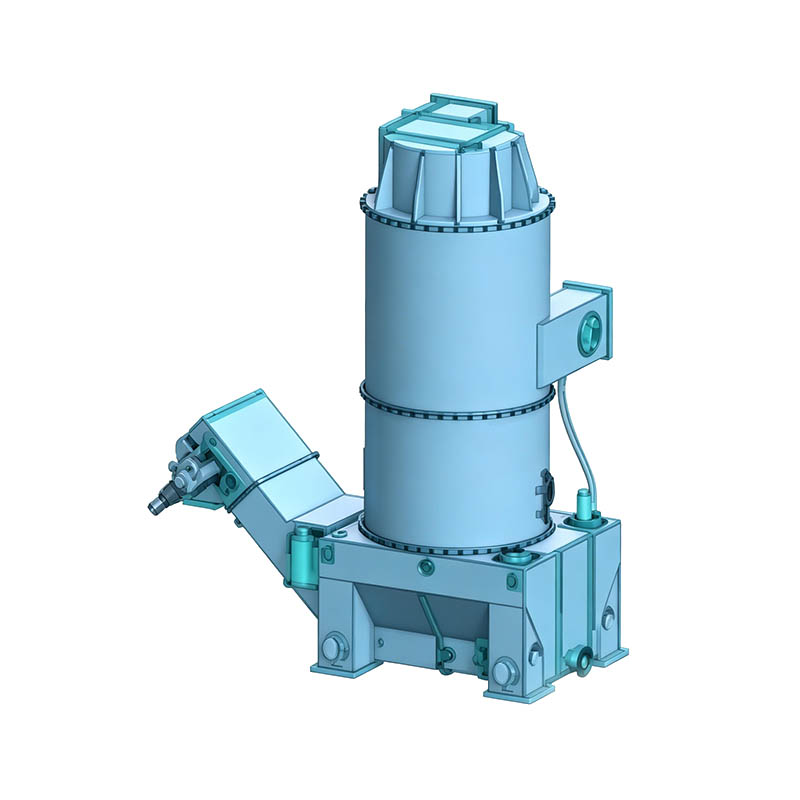
 TD Flat Bag Dust Collector for Foundry and Industrial DustFlat-bag collector with downflow distribution, side-insert bags, online pulse cleaning, and modular capacity for high-volume melting, pouring, and sand-handling dust control.View Product →
For high-volume melting, pouring and sand-handling lines, a flat bag collector with wide bag spacing and pulse-jet cleaning remains the workhorse configuration. Tight bag spacing raises can velocity and pushes dust back onto neighbouring bags after every cleaning pulse.
Capture Velocity: The Number That Decides Whether the System Works
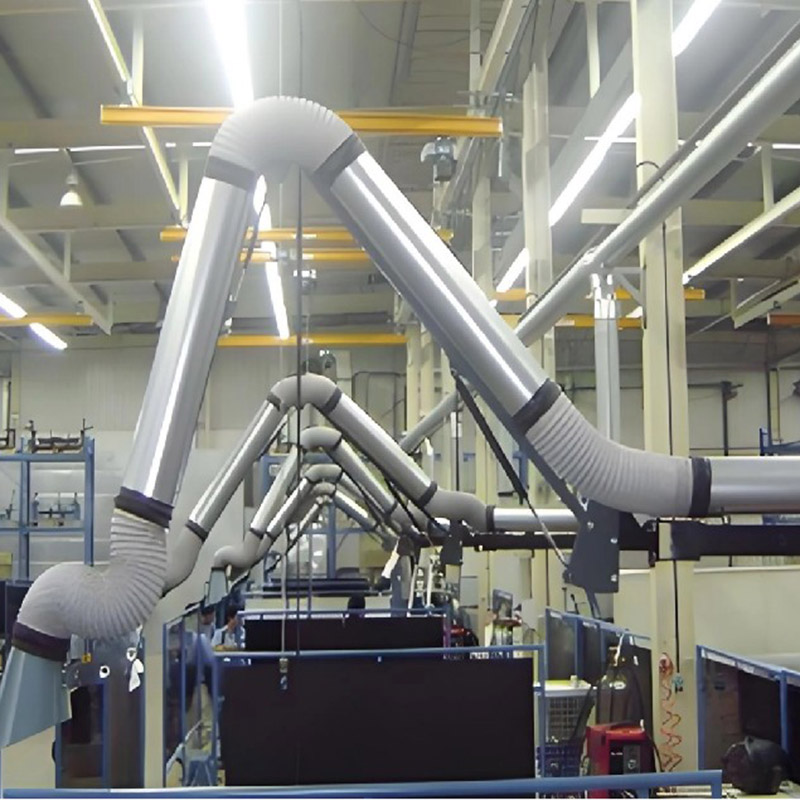
Capture velocity, not filter efficiency, is the most common reason a system that looks compliant on paper fails its first stack test. Air has to move fast enough at the point of release to pull the contaminant into the hood before cross-draughts and operator movement scatter it into the room.
Typical design capture velocities by hood type
Once the contaminant is captured, transport velocity takes over. Metal dust needs roughly 18 to 22 m/s in horizontal ductwork to stay airborne, while welding fume and light plastic dust can be carried at 10 to 13 m/s. Sizing one duct for both duties usually ends with settled material in one branch and an over-powered fan in the other.
18-22 m/s
Duct transport velocity required to keep metal dust suspended. Drop below it and material settles inside the horizontal runs, quietly reducing flow until the hood stops capturing altogether.
Selection Criteria That Drive Total Cost of Ownership
Four numbers separate a system that costs more to buy from one that costs more to run, and they belong on the same comparison sheet before any quotation is ranked.
0.6-0.9m/min air-to-media ratio for pleated cartridge collectors
800-1200Pa clean pressure drop across a well-designed unit
2-4years of filter life with effective pre-separation
18-22m/s transport velocity for metal dust in ductwork
Air-to-media ratio is the first figure to interrogate. A cartridge collector pushed to 1.2 m/min to shrink the housing runs at higher can velocity, re-entrains dust on every pulse cycle and shortens media life in a way that never appears in the purchase price.
Pressure drop is the second. Every 250 Pa of avoidable resistance on a 20,000 m3/h system draws roughly 2 kW of extra fan shaft power, about 17,500 kWh a year on continuous duty. Across five years that single number often outweighs the price gap between two competing units.
For foundry dust collection, where dust loading and temperature swing at the same time, sizing margins usually need to be wider than a catalogue table suggests.
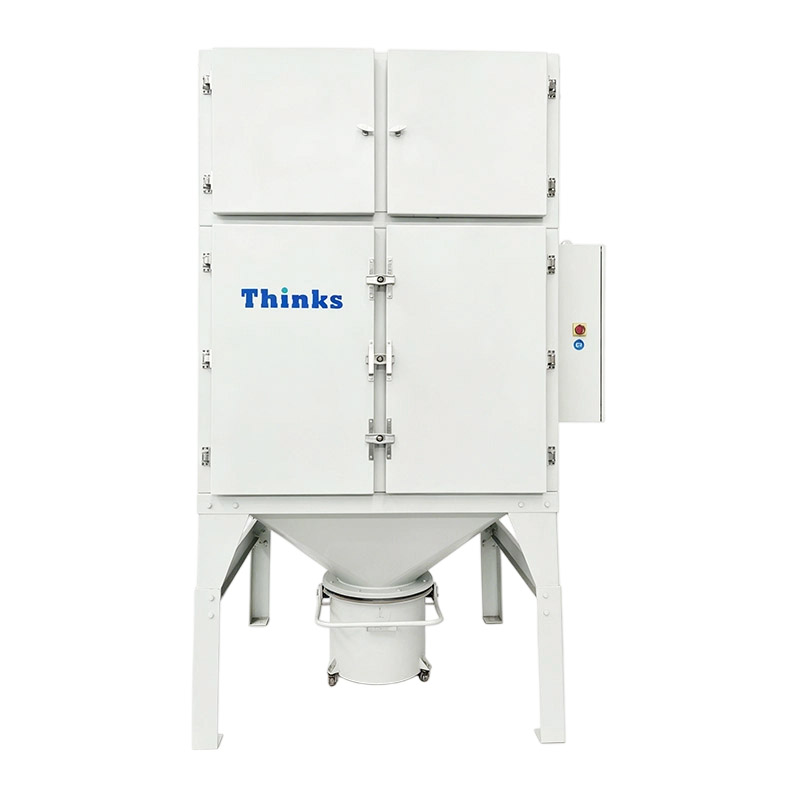
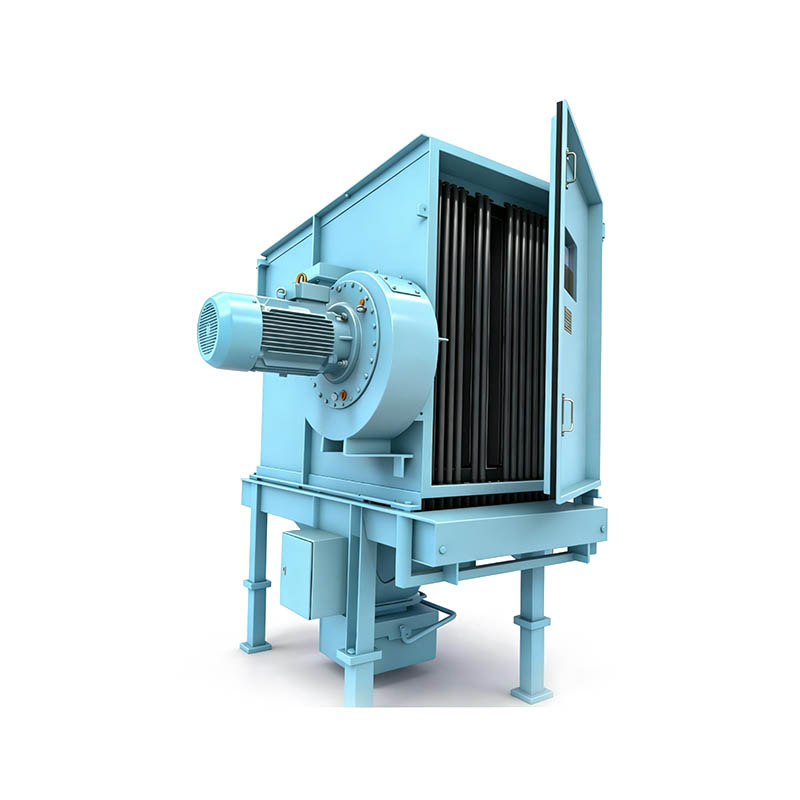
 TMC Series Cartridge Dust Collector for Fine Dust and Welding FumePulse-jet cartridge collector with compact upper box and specialized cartridges for welding, cutting, polishing, and light industrial dusts where fine dry particulate requires careful sizing.View Product →
Cartridge units suit welding, laser and plasma cutting and dry machining, where dust is fine, dry and oil-free. The footprint advantage holds only when the air-to-media ratio, pulse cleaning pressure and inlet baffling are sized for the real dust loading.
Explosive Dust, Oil Mist and VOC Streams Follow Different Rules
Combustible dust, oil mist and solvent vapour cannot be handled by the same equipment family that manages inert metal dust, and treating them as though they can is the most expensive mistake in this category.
Inert dry dust
- Standard cartridge or bag collector with gravity discharge
- Mild steel construction, no explosion venting required
- Media selected for abrasion and moisture resistance
Combustible dust
- Kst, Pmax and ignition energy testing before selection
- Explosion venting, flameless venting or a wet collector
- Bonding and grounding continuity verified at every joint
Oil mist is a third case. Coolant aerosol behaves like a liquid, not a solid, so a coalescing oil mist processor that drains fluid back to the machine outperforms a dry filter that blinds within weeks. Solvent vapour needs a different route again: activated carbon adsorption, or desorption followed by catalytic combustion when the solvent load justifies heat recovery.
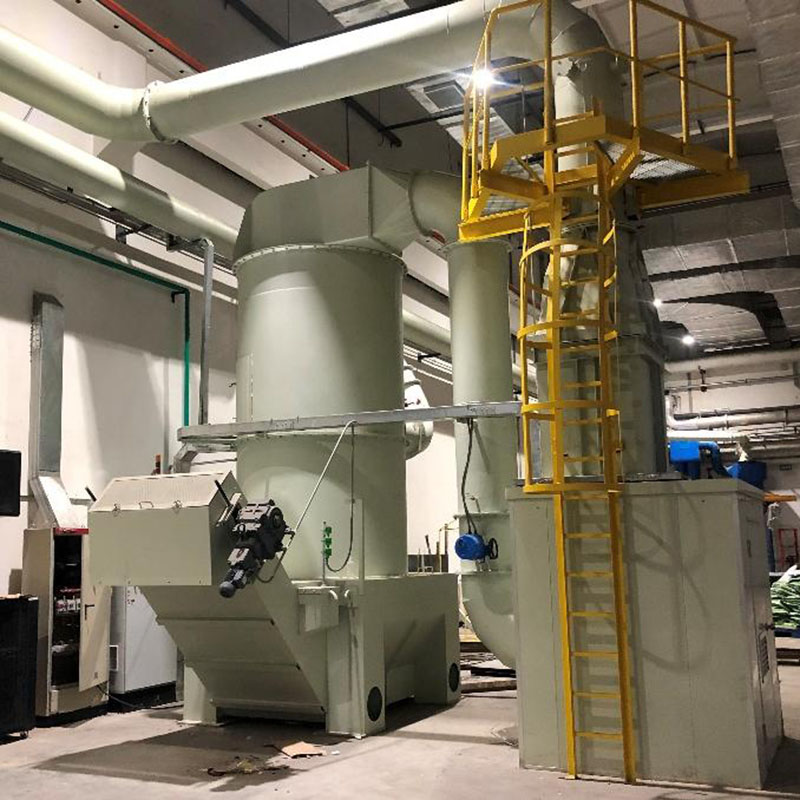 TVC Explosion-Proof Wet Dust Collector for Reactive Metal DustWet scrubbing collector that wets and cools high-temperature, flammable dusts without filter media, supporting automatic sludge removal for reactive metal and foundry applications.View Product →
Where dust is reactive, hygroscopic or prone to self-ignition, a wet collector removes the fuel from the equation by capturing particles in a water film. That choice brings sludge handling and corrosion control with it, so the decision belongs to a risk assessment rather than a price list.
How to Verify Air Pollution Control Equipment Performance
Performance should be proven against a written test protocol, not against an efficiency figure printed on a datasheet. Verification starts before the first filter is loaded and continues through the first year of operation.
- Baseline capture check. Face velocity traverse at every hood before commissioning, recorded against the design drawing.
- Transport verification. Pitot traverse on the main runs to confirm the design velocity is actually reached.
- Filter integrity. Leak detection plus continuous differential pressure logging on each compartment.
- Stack test. Isokinetic sampling to EN 13284-1 or EPA Method 5, with operating parameters logged at the same time.
- Documentation handover. Fan curve, motor current, spare parts list and media certificate filed with the operating log.
Changzhou Thinks Environmental Technology Co., Ltd., a system supplier based in Changzhou, China, builds its delivery model around that sequence: a 22,000 square metre factory with in-house assembly and testing, plus service offices in Mexico and Russia supporting export markets that passed 15 percent of sales in 2022. That structure matters at commissioning, when hood balance, fan curve and control logic have to be adjusted together.
Frequently Asked Questions
How do I choose between a bag filter and a cartridge collector?
Start with the dust, not the price. Free-flowing dry dust at moderate loading suits a cartridge collector, which occupies roughly half the floor area of a baghouse at the same flow. Sticky, hygroscopic, high-temperature or abrasive dust points to a bag filter with wider bag spacing and a pre-cooling or pre-separation stage.
What is the difference between capture velocity and transport velocity?
Capture velocity is measured at the hood face and describes how fast air must move to pull the contaminant away from the source. Transport velocity is measured inside the duct and describes how fast air must move to keep the captured material suspended. A system can meet one and fail the other, so both belong on the design drawing.
How often should dust collector filters be replaced?
Media life depends on loading, abrasion and cleaning intensity, but two to four years is realistic for a correctly sized unit with effective pre-separation. Replace on differential pressure trend and visible emission rather than on a fixed calendar. A filter that fails at eighteen months almost always signals an air-to-media ratio problem upstream.
Can one system handle both dust and solvent vapour?
It can, but the stages must be sequenced correctly. Particulate has to come out first, because carbon beds and oxidation catalysts are both poisoned by dust. The usual arrangement is a cartridge or bag collector followed by activated carbon adsorption, with desorption and catalytic combustion added when solvent concentrations justify heat recovery.