English
 عربى
 Español
 中文简体

Content
- 1 What a Bag Filter Is and Where It Sits in a Dust Control Line
- 2 Pulse Jet, Reverse Air, or Shaker: Choosing the Cleaning Method
- 3 Filter Media Sets Bag Life More Than the Collector Does
- 4 Sizing a Bag Filter by Air-to-Cloth Ratio: Five Decisions
- 5 When a Bag Filter Is the Wrong Choice
- 6 Maintenance Signals That Predict Bag Failure
- 7 Bag Filter FAQ
A foundry that replaces its filter bags every eight months is almost never fighting the bags. It is fighting an air-to-cloth ratio set too high during sizing, or a media grade chosen on unit price instead of the gas temperature leaving the melting shop.
Get the specification right and a bag filter behaves predictably: outlet dust concentration below 10 mg/m3, differential pressure stable between 800 and 1500 Pa, and a bag set that lasts two to four years. Get it wrong and the same hardware consumes a full set of bags every two or three quarters, with downtime costing far more than the bags themselves.
The variables that decide which outcome you get are not complicated, but they must be settled in the right order: cleaning method first, then media grade, then filtration velocity, then the pre-treatment stages upstream of the housing.
Definition: A bag filter is an industrial dust collector that passes dust-laden gas through woven or non-woven fabric bags. Particulate is captured on the fabric surface and inside the fabric structure while cleaned gas leaves the housing. Efficiency commonly reaches 99.9 percent on particles down to 0.5 micron.
What a Bag Filter Is and Where It Sits in a Dust Control Line
A bag filter is one stage of a five-stage dust control line, and it only performs to specification when the other four stages are designed first. Each stage protects the next one, so skipping the upstream work shows up later as short bag life rather than as an obvious design fault.
- Capture. A hood at the emission point, sized to hold capture velocity at the source. A loose-fitting hood pushes dust into the building instead of into the duct.
- Conveyance. Ductwork carrying 18 to 22 m/s so dust stays suspended and does not settle in horizontal runs.
- Pre-treatment. A spark catcher for grinding and welding fume, an air cooler for gas above the media rating, so the bags never see the peak condition.
- Filtration. The bag filter housing, bags, cleaning system, and hopper.
- Discharge and polishing. Rotary airlock or screw conveyor for collected dust, plus activated carbon adsorption and catalytic combustion where the gas also carries volatile organic compounds.
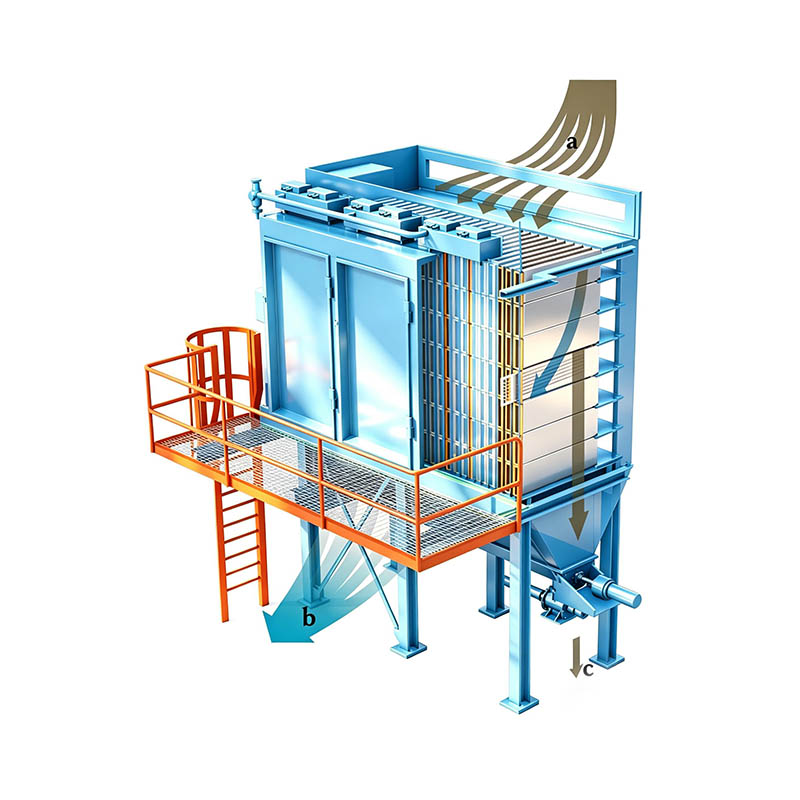
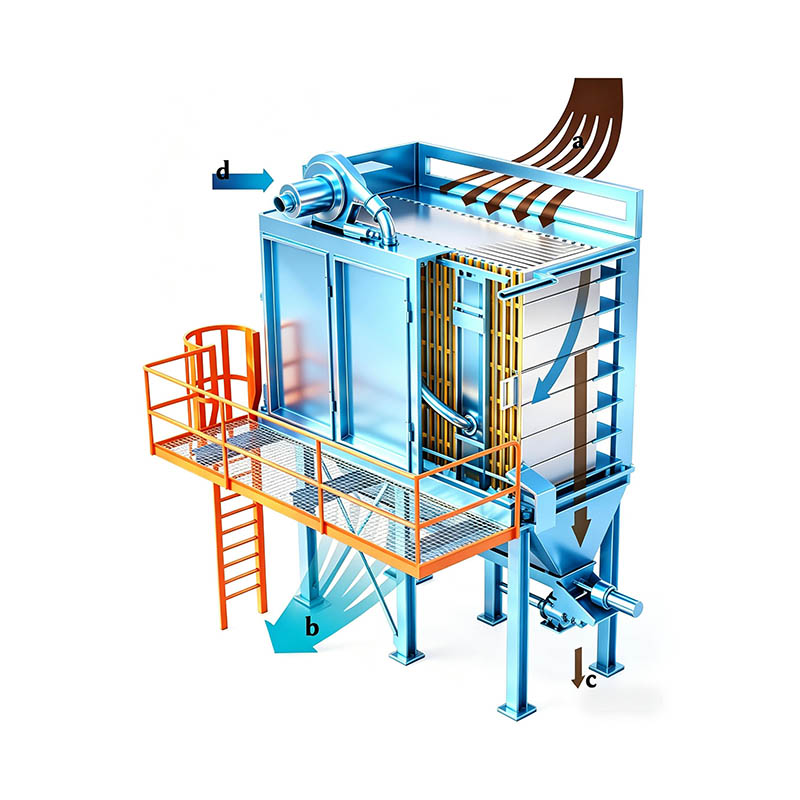
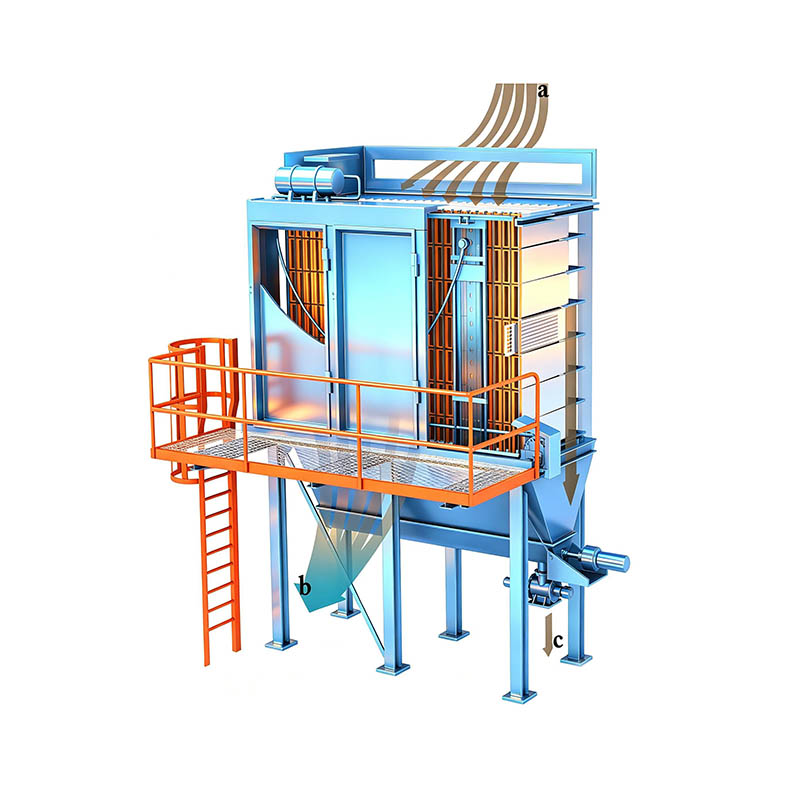
Changzhou Thinks Environmental Technology Co., Ltd. supplies the filtration stage as flat bag dust collectors in four configurations, ranging from the standard duty model to compact housings for indoor retrofits. The TD type covers the mainstream range of medium to large gas volumes at moderate dust loading.
 TD Flat Bag Dust Collector for Medium to Large Air VolumesModular downflow flat-bag collector with online pulse cleaning and side access, suited to foundry, metallurgy, chemical, and other dry dust duties.View Product →
In foundry and metallurgical plants the bag filter sits downstream of melting and pouring, so it inherits sparks, sharp temperature swings, and metal oxide fume. Layouts for those melting and pouring lines are covered in the foundry dust control solutions reference.
In foundry service, a bag filter is not judged on collection efficiency alone. It is judged on how many heat cycles the bags survive before the fabric embrittles.
Pulse Jet, Reverse Air, or Shaker: Choosing the Cleaning Method
Pulse-jet cleaning is the default for new industrial bag filters because it supports the highest filtration velocity and therefore the smallest housing for a given gas volume. Reverse-air and shaker designs still appear in older plants and in specific low-loading duties, but they demand far more cloth area for the same duty.
| Cleaning Method | Cleaning Action | Typical Filtration Velocity | Best Fit | Main Risk |
| Pulse jet | Compressed air pulses expand the bag and release the cake | 0.8 to 1.2 m/min | General industrial dust at high volume | Bag wear at the pulse contact points if pressure is set too high |
| Reverse air | Low-pressure air flows backwards through the bag | 0.4 to 0.6 m/min | Large gas volumes with light dust loading | Larger footprint and slower cleaning cycles |
| Mechanical shaker | A motor-driven frame shakes the bags | 0.3 to 0.5 m/min | Small units on intermittent duty | High mechanical wear and limited cloth area |
Practical consequenceA pulse-jet unit cleaning at 1.0 m/min needs roughly half the cloth area of a reverse-air unit handling the same gas volume. That ratio is why pulse jet dominates new installations and why reverse air survives mainly in very large, low-loading applications.
Filter Media Sets Bag Life More Than the Collector Does
Filter media grade determines bag life more than housing design does, because the fabric is the only component in continuous contact with temperature, moisture, and chemistry. Two hard constraints come first, continuous service temperature and chemical resistance; abrasion resistance decides bag life once those two are satisfied.
Maximum continuous service temperature by media, in degrees Celsius
PTFE
260
Fiberglass
260
Polyimide
240
Aramid
200
PPS
190
Polyester
130
Typical industry ratings under dry, non-condensing conditions.
- Polyester, 130 degrees Celsius. Dry, non-aggressive dust in packaging, woodworking, and general workshop extraction. Lowest cost, and the most common specification error when the gas actually runs hot.
- Polyphenylene sulfide (PPS), 190 degrees Celsius. Coal and biomass combustion, sulfur-bearing gas, and mildly acidic streams.
- Aramid, 200 degrees Celsius. Foundry, steel, and metal processing, where abrasion resistance matters as much as temperature.
- Polyimide, 240 degrees Celsius. Mixed acid gas and high-temperature processes where PPS would hydrolyse.
- Polytetrafluoroethylene (PTFE), 260 degrees Celsius. Chemically aggressive gas and duties where extended bag life justifies the premium.
- Fiberglass, 260 degrees Celsius. High-temperature dry gas with no condensation risk. Mechanically brittle under repeated flexing.
A bag running 10 degrees Celsius above its continuous rating can lose half of its flex life within a year. The bags usually look intact during inspection and fail on the next cleaning pulse.
Sizing a Bag Filter by Air-to-Cloth Ratio: Five Decisions
Air-to-cloth ratio, expressed as metres per minute of gas per square metre of cloth, is the number that fixes housing size, bag count, and expected bag life. It should be set before any hardware is specified, because every later choice is constrained by it.
- Establish the real gas volume at operating temperature. Thermal correction changes the figure by 30 to 50 percent between ambient and 200 degrees Celsius, and sizing on ambient flow is the most common cause of an undersized unit.
- Characterise the dust: loading in grams per cubic metre, particle size distribution, abrasiveness, stickiness, and whether the material is explosible.
- Select the media from the temperature and chemistry envelope first, then check abrasion resistance and cost.
- Convert gas volume to cloth area using the air-to-cloth ratio, then add 10 percent of cloth area as margin for cleaning cycle recovery.
- Confirm the pre-treatment and the can velocity. Can velocity above 1.5 m/min re-entrains dust that has already been separated.
0.8 to 1.2
m/min air-to-cloth ratio for pulse jet on general industrial dust
800 to 1500
Pa normal operating differential pressure band
1.0 to 1.5
m/min can velocity limit inside the housing
Pre-treatment is the cheapest insurance in the system. A spark catcher upstream of the housing removes glowing particles from welding, grinding, and laser cutting before they reach the fabric, which is where most unexplained bag failures in metalworking plants originate.
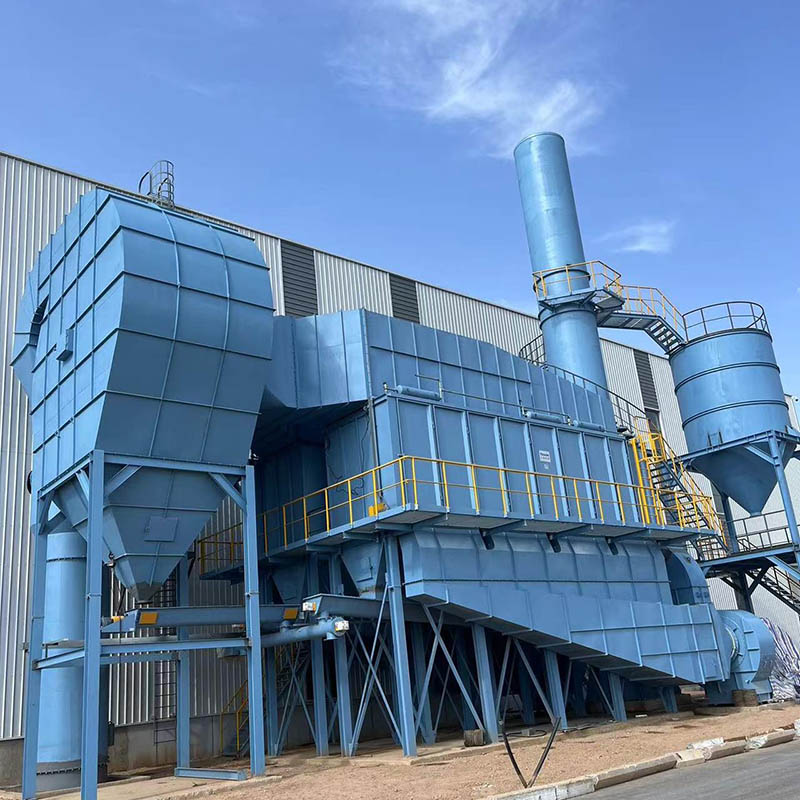 Spark Arrestor Pre-Treatment for Industrial Dust Collection SystemsPassive heavy-duty device that separates and extinguishes sparks before bag filters, reducing fire risk and filter load in welding, grinding, and foundry work.View Product →
When a Bag Filter Is the Wrong Choice
A bag filter is the wrong choice when the dust is oily, sticky, hygroscopic, or explosible, because fabric media depend on a dry, free-flowing cake to hold both efficiency and cleaning performance. In those duties the correct answer is a different separation principle, not a different bag.
A bag filter is the right choice when
- Gas is dry and the dust is free-flowing
- Temperature is above ambient and reasonably stable
- Gas volume is high and particles are fine
- Sub-micron fume must be captured at above 99 percent efficiency
Choose another technology when
- Dust is oily, from machining or cold rolling. An oil mist processor handles the aerosol directly.
- Dust is explosible metal or organic powder. An explosion-proof wet dust collector removes the ignition pathway.
- Contamination is surface dust and settled material across a workshop. A high vacuum system is the practical tool.
- Gas carries solvent vapour alongside particulate. Activated carbon adsorption and catalytic combustion treat that stream.
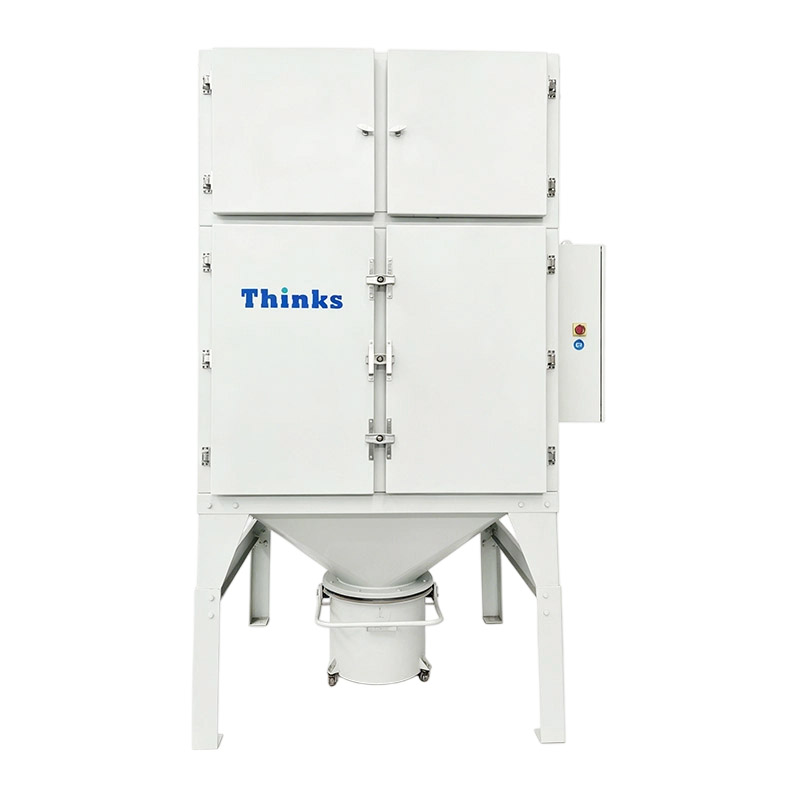
Where the dust is suitable but floor space is the binding constraint, a compact flat bag housing keeps the same filtration principle in a smaller footprint, which matters in indoor retrofits where headroom and duct routing are already fixed.
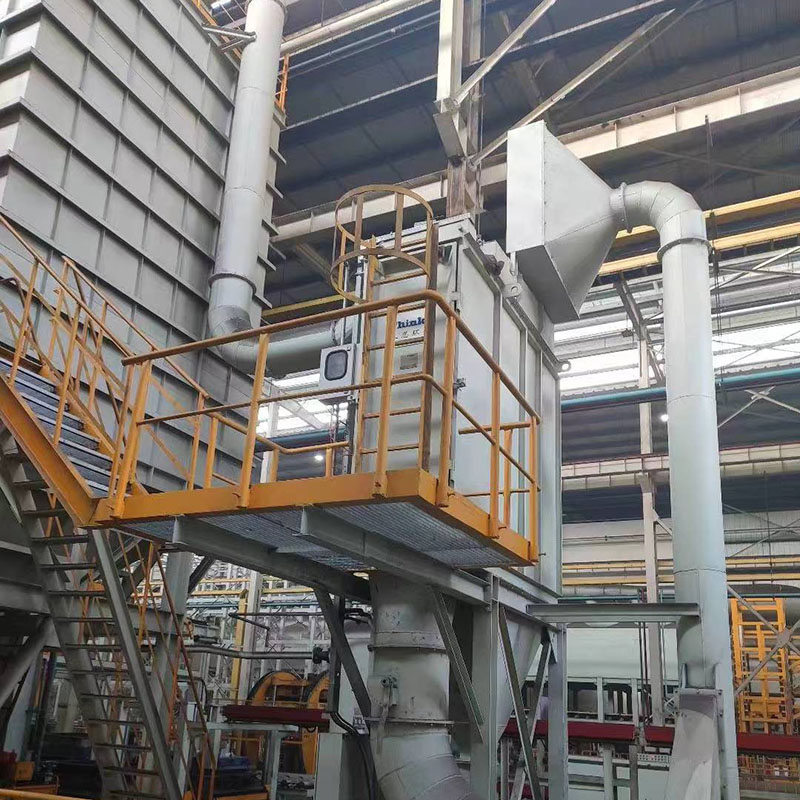 TDC Compact Flat Bag Dust Collector for Limited-Space InstallationsCompact downflow flat-bag unit with online pulse cleaning and side-door access, suited to dry powders in foundry, metalworking, chemical, and battery lines.View Product →
Maintenance Signals That Predict Bag Failure
Differential pressure trend is the most reliable early indicator of bag condition, ahead of visual inspection, because it reflects the whole bag set rather than the few bags an inspector can reach through the access door.
- A steady rise of 200 to 300 Pa per month with the cleaning cycle unchanged points to blinding or moisture, not to worn bags.
- A sudden drop below 400 Pa usually means a torn bag or a failed seal, and the collector is passing dust in bulk.
- A visible plume at the stack while differential pressure stays normal points to a gasket, tube sheet, or inlet baffle problem.
- Increasing pulse frequency to hold differential pressure means the cake is no longer releasing cleanly from the fabric.
- Bag age against expected service life for the media grade: an aramid set rated for 24 months rarely recovers once it passes that point at an elevated differential pressure.
Recording disciplineLog differential pressure weekly at the same load condition. A trend line built from twelve readings tells you more about remaining bag life than an annual internal inspection.
A structured inspection routine, including pulse valve checks, compressed air dew point, and hopper discharge integrity, is set out in this pulse-jet baghouse maintenance checklist.
Bag Filter FAQ
How long does a set of filter bags last?
Two to four years in most industrial service, but the range is wide and media-driven. Polyester on dry workshop dust can reach four years, aramid in foundry fume typically runs two to three, and any media operating above its continuous temperature rating may fail inside twelve months. Differential pressure trend is a better predictor than calendar age.
What is the difference between a bag filter and a baghouse?
The terms are used interchangeably in industrial practice. A baghouse is the complete assembly of housing, bags, cleaning system, hopper, and discharge; a bag filter describes the same equipment in its dust removal function. Both refer to fabric filtration of a gas stream, as distinct from a cartridge collector, wet scrubber, or electrostatic precipitator.
What air-to-cloth ratio should a pulse-jet bag filter use?
For general industrial dust, 0.8 to 1.2 m/min. Use the lower end for fine fume, sticky dust, or heavy loading, and the upper end only for coarse, free-flowing material with light loading. A lower ratio means a larger housing and higher capital cost, but the gain in bag life normally outweighs that cost within the first replacement cycle.
Can a bag filter handle explosible dust?
Fabric media can be specified with antistatic construction, full grounding, and explosion venting, but a bag filter is not the first choice for highly explosible metal powder. An explosion-proof wet dust collector captures the dust into a water bath and removes the ignition pathway, which is the safer specification where minimum ignition energy is low.
Bag filter performance comes down to three decisions made before the purchase order is issued: match the cleaning method to the dust, match the media to the temperature and chemistry, and set the air-to-cloth ratio with margin rather than optimism. Everything after that is maintenance discipline.
The specification sequence that works
Cleaning method, then media grade, then air-to-cloth ratio, then pre-treatment. A collector specified in that order on a foundry, chemical, or pharmaceutical duty will hold its differential pressure band, protect its bags, and reach the end of the projected life cycle without a mid-year bag change.