English
  عربى
عربى  Español
  中文简体
中文简体

Content
- 1 Welding Fume Control Starts with Chemistry, Not Hardware
- 2 Health Effects and the Exposure Limits That Matter
- 3 Three Factors Decide How Dangerous Fume Is
- 4 Source Capture Beats Dilution
- 5 Which Dust Collector Is Right for Welding Fume
- 6 Matching the System to the Real Welding Operation
- 7 Verification, Maintenance, and Replacement Decisions
- 8 A Systems View of Welding Fume Control
Welding Fume Control Starts with Chemistry, Not Hardware
A single manual welding station running on carbon steel can push total welding fume above the 5 mg/m³ OSHA permissible exposure limit within minutes if no local exhaust is applied. That plume is not ordinary smoke: it is condensed metal vapor, mostly iron oxide and manganese oxide particles between 0.01 and 1 µm, plus traces of alloying elements, fluxes, and surface coatings.
The practical conclusion is the same for every shop: welding fume must be captured at the arc and filtered with equipment selected for the specific fume chemistry, not merely diluted with fans or handled with respirators alone. Over a working lifetime, even jobs that seem harmless can produce measurable neurological, respiratory, and carcinogenic harm.
Welding fume forms when base metal, filler metal, and surface coatings are heated above their boiling points. The vapor condenses rapidly into oxide particles, most of them sub-micron, which means they bypass the upper airways and deposit deep in the lungs. The exact composition varies for every joint, and that variation dictates both the health risk and the filter media you need.
| Base Material | Typical Fume Constituents | Primary Health Concern |
|---|---|---|
| Carbon steel | Iron oxide, manganese | Metal fume fever, lung irritation, manganese neurotoxicity |
| Stainless steel | Chromium, nickel, hexavalent chromium | Lung cancer risk, respiratory sensitization |
| Aluminum | Aluminum oxide, magnesium oxide | Respiratory irritation, metal fume fever |
| Galvanized steel | Zinc oxide | Metal fume fever |
| Coated or painted surfaces | Lead, cadmium, organic compounds | Systemic toxicity, kidney and bone damage |
Health Effects and the Exposure Limits That Matter
Welding fume causes both short-term and long-term damage. The IARC classifies all welding fume as Group 1, carcinogenic to humans, so the real question is not whether the fume is hazardous but how quickly your control system brings exposure down.
Acute symptoms
Metal fume fever is the classic response: flu-like chills, fever, headache, and nausea appearing hours after exposure. Eye, nose, and throat irritation, dizziness, and chest tightness are also common when capture is poor.
Chronic conditions
Repeated exposure affects the lungs, kidneys, and central nervous system. Manganese in the fume is linked to a Parkinson-like neurological syndrome, and hexavalent chromium from stainless steel is associated with lung cancer. These are documented outcomes that drive modern compliance requirements, not hypothetical risks.
Limits your system should be designed against
The OSHA PEL for total welding fume is 5 mg/m³, but most individual metals in the fume have limits far below that. Hexavalent chromium is capped at 5 µg/m³, one thousand times lower, and ACGIH recommends a respirable manganese TLV of 0.02 mg/m³. When a single component drives the limit that low, a "keep it invisible" approach will fail. The design target should be source capture above 90 percent, verified by personal sampling.
Three Factors Decide How Dangerous Fume Is
Welding fume risk comes down to three variables. The equipment choice should address all three, because controlling only one is rarely enough.
- Toxicity of the fume: stainless steel, galvanized surfaces, and painted or coated materials produce more toxic constituents than clean carbon steel, so filter efficiency and maintenance procedures must match the chemistry.
- Concentration in the breathing zone: distance from the arc, air currents, and the presence of local exhaust determine concentration. Torch-tip extraction keeps the operator out of the plume instead of hoping the room air dilutes it.
- Duration of exposure: a welder working 40 hours per week accumulates dose even at moderate concentration, so the ventilation system must hold exposure low for the full shift, not only during heavy runs.
Source Capture Beats Dilution
The most effective and least energy-hungry control is capture at the arc. Dilution ventilation moves contaminants around a large space, requires far more air, and leaves the welder's breathing zone in the path of the plume.
For manual stations, the standard tools are fume extraction guns, on-gun nozzles, and local hoods. Capture velocity at the hood face should typically be in the range of 100 ft/min (0.5 m/s) for side-draft hoods, while high-velocity low-volume nozzles at the torch can run much higher because the capture point is only centimeters from the arc. Matching the hood geometry to the workpiece is the difference between a system that looks compliant and one that measures compliant. A custom collection hood shaped around a large vessel or a repetitive fabrication station is often the single best investment in the layout.
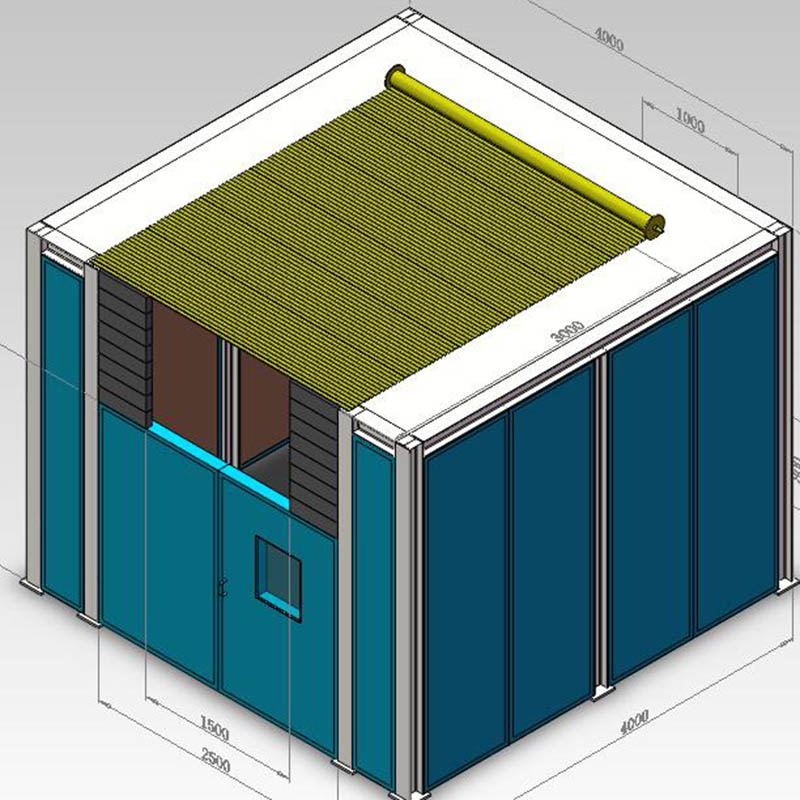 Wholesale Customized Suction Hood Manufacturer, FactoryChangzhou Thinks Environmental Technology Co., Ltd is China Wholesale Customized Suction Hood Manufacturer and OEM/ODM Factory,Customized...View Product →
Welding also throws off hot sparks, and grinding or cutting chips can be pulled into the duct. A spark catcher installed ahead of the collector prevents smoldering material from reaching the filter media, and an air cooler may be needed on very hot exhaust streams. These upstream elements are exactly why a welding fume system should be designed as a whole chain, not assembled piece by piece.
Which Dust Collector Is Right for Welding Fume
Most welding fume is fine, dry, and slightly adhesive, which makes cartridge filtration the strongest candidate. Pleated cartridges offer a large filter area per footprint, and PTFE-coated media release fine fume during pulse cleaning instead of blinding. Flat bag collectors suit very high air volumes or coarser dust loads. High-vacuum systems are the right choice when fume must be caught directly at the torch or pulled through long hoses, and explosion-proof wet collectors cover niche cases where combustible metal dust is present.
| Collector Type | Fume Characteristics | Best Fit |
|---|---|---|
| Cartridge collector (TMC series) | Fine, dry, sub-micron fume | Central multi-station systems, robotic cells, continuous duty |
| Flat bag collector (TD/TDC/TF/TP) | Coarser dust, high air volume | Large fabrication bays with grinding and cutting dust |
| High-vacuum system (THC series) | Very fine fume captured at the torch | Manual stations, robots with limited envelope, cleanup hoses |
| Oil mist processor (TEM series) | Oily aerosol mixed with fume | Processes combining welding with machining or lubricant mist |
| Explosion-proof wet collector (TVC series) | Combustible dust in fume form | Aluminum and magnesium dust with low ignition energy |
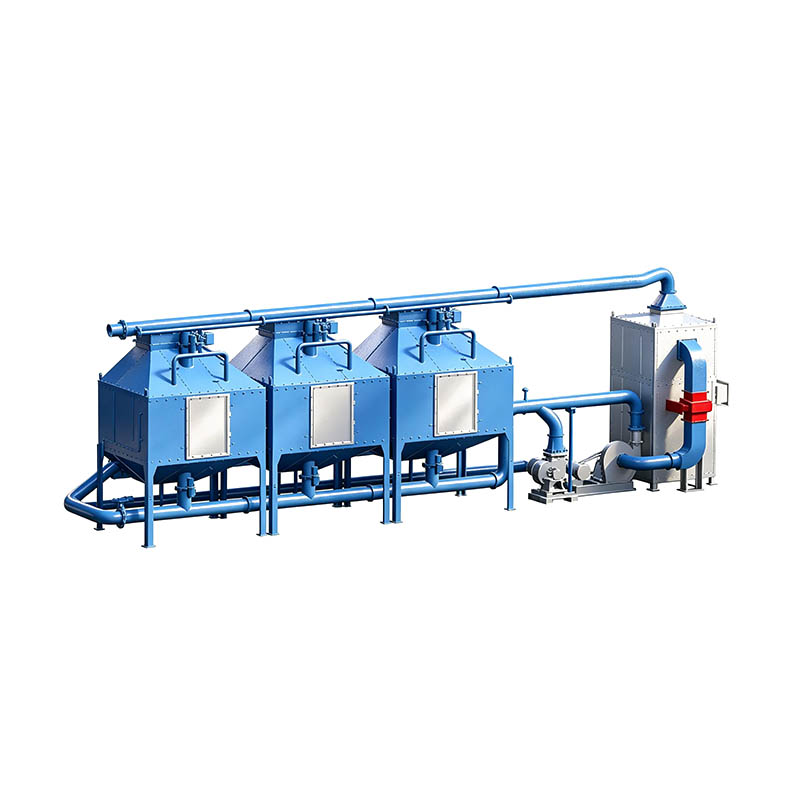
For a typical fabrication shop welding carbon steel and stainless, the practical recommendation is a central cartridge system with spark protection. The TMC series cartridge dust collector is built for fine particulate loading and continuous pulse cleaning, which suits steady fume generation better than intermittent systems.
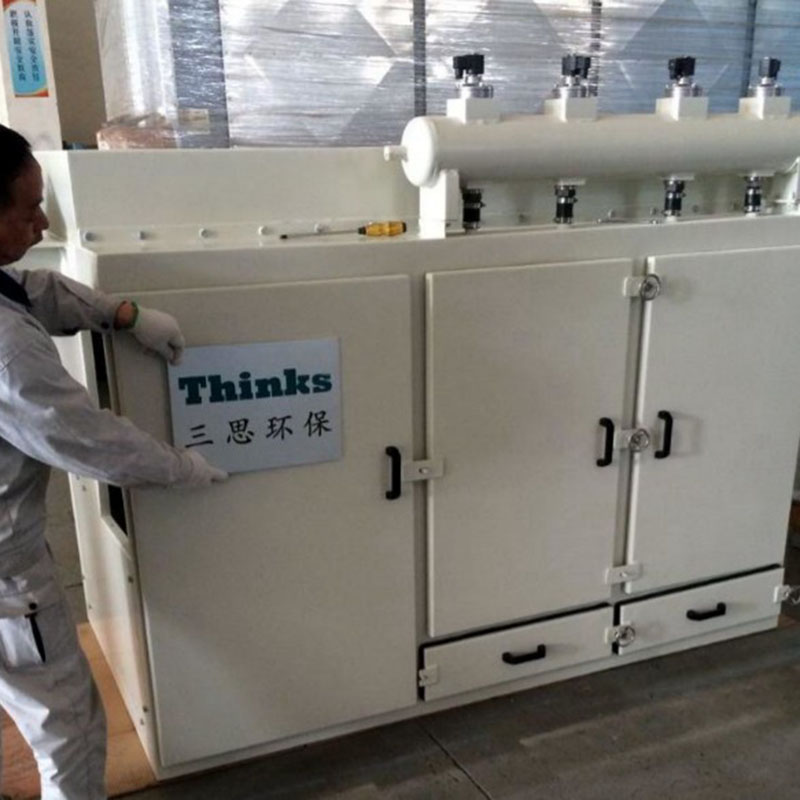 Wholesale TMC Series Cartridge Dust Collector Manufacturer, FactoryChangzhou Thinks Environmental Technology Co., Ltd is China Wholesale TMC Series Cartridge Dust Collector Manufacturer and OEM/ODM Factor...View Product →
Matching the System to the Real Welding Operation
Selection does not end with the collector. The layout, duty cycle, and secondary processes decide whether the system performs on the floor or only on paper.
Robotic and automated welding cells
Robotic cells run with high consistency, so extraction can be tuned precisely: a fixed hood over the seam or extraction at the torch, with a damper-regulated branch to the central collector. A spark catcher ahead of the collector protects the filter media from the intermittent sparks that automated welding still produces.
Manual and multi-station shops
Manual welding is less predictable. Fume extraction guns at each station give operators capture right at the arc without disturbing shielding gas. A high-vacuum dust removal system is the practical way to serve several stations with one pump set, because high suction maintains capture through long hoses that low-pressure collectors cannot support.
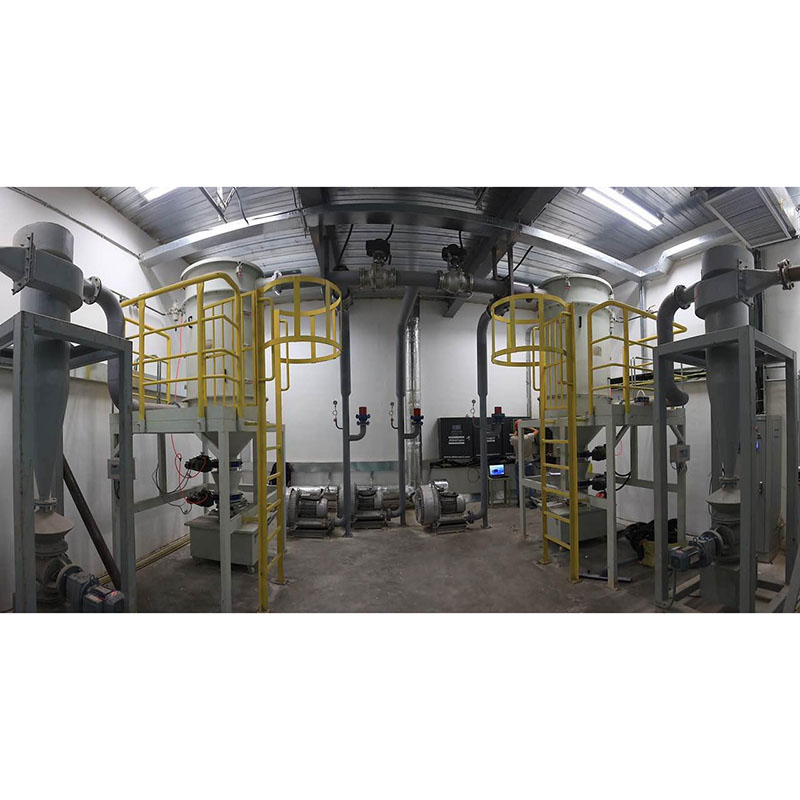 Wholesale THV Series High Vacuum Dust Removal System Manufacturer, FactoryChangzhou Thinks Environmental Technology Co., Ltd is China Wholesale THV Series High Vacuum Dust Removal System Manufacturer and OEM/ODM...View Product →
Large fabrications, maintenance, and repair work
When welders move around a large vessel or repair equipment in a steel plant, fixed hoods are not enough. Traveling extractors, swing-arm hoods, and portable high-vacuum hoses fill the gap. In these environments, fume control joins grinding dust and cutting operations, so solutions built for steel plant environments treat welding as part of a broader dust-control program rather than an isolated process.
Settled dust is a second exposure source
Sub-micron fume eventually agglomerates and settles on beams, cables, and floors. Disturbing that dust without proper filtration re-suspends toxic metal particles into the air. The same high-vacuum line used for torch extraction can be fitted with a floor tool, which removes the temptation to blow down the shop with compressed air. Foundry repair shops in particular benefit from this integrated approach; foundry fume and dust solutions combine hood capture, high-vacuum cleanup, and centralized filtration in one package.
Verification, Maintenance, and Replacement Decisions
Source capture design matters only if the system is verified and maintained. Differential pressure, branch airflow, and personal exposure samples are the three numbers that tell you whether the system still protects workers.
Filter life on welding fume tracks media selection and pulse settings. A PTFE-coated cartridge can run for years on light duty, while an undersized collector or poor pulse timing can blind the media in months. Rising pressure drop and falling airflow both signal that the filter area is no longer adequate for the installed motors.
When airflow drops below the design point, capture velocity at the hood falls and fume escapes into the breathing zone even though the collector still runs. At that point, filter replacement or collector upgrade is not optional. The checklist for deciding when to replace your dust collector walks through the indicators our service engineers use in factory audits.
A Systems View of Welding Fume Control
Welding fume is a fine, chemistry-dependent aerosol with health effects ranging from metal fume fever to neurological and carcinogenic risk. The reliable response is the same chain every time: capture at the arc, convey through properly sized ducting, protect the filter from sparks, filter with media suited to sub-micron particles, and verify performance with airflow and exposure measurements.
The equipment choice follows the process: a cartridge collector for continuous multi-station duty, a high-vacuum system when capture must travel to the torch or the floor, custom hoods when workpiece geometry is awkward, and spark or cooling protection when process heat demands it. Factories that treat welding fume as a system problem instead of a single-box purchase get lower energy bills, fewer filter changes, and operators who are no longer breathing metal vapor.