English
  عربى
عربى  Español
  中文简体
中文简体

Content
- 1 What Auxiliary Equipment Includes
- 2 Working Principle and System Integration
- 3 Technical Specifications and Key Performance Factors
- 4 Comparing Common Auxiliary Equipment Types
- 5 6 Tips for Dust-Collection Upgrades
- 6 Selection Considerations and Purchasing Factors
- 7 How to Properly Start Up Your Dust Collector
- 8 Common Mistakes and Overlooked Considerations
- 9 Industry Trends and Future Outlook
- 10 Conclusion
- 11 FAQ
- 11.1 What is auxiliary equipment in a dust collection system?
- 11.2 What accessories improve dust collector performance?
- 11.3 How do you properly start up a dust collector?
- 11.4 What causes dust collector inefficiency?
- 11.5 How often should dust collection equipment be inspected?
- 11.6 Is auxiliary equipment required for combustible dust applications?
- 11.7 Can auxiliary equipment be added to an existing dust collector?
Dust Collection Auxiliary Equipment refers to the supporting components that work alongside a primary dust collector to improve airflow control, material handling, and system safety. Rather than functioning as standalone units, these components are integrated into a dust collection system to address specific tasks such as regulating airflow, releasing collected material, monitoring pressure, or reducing fire and explosion risk. Understanding what falls under this category, how each component functions, and what to check before adding or upgrading equipment helps facility teams keep a dust collection system operating reliably over time.
What Auxiliary Equipment Includes
A primary dust collector, such as a baghouse or cartridge unit, captures airborne particulate from an industrial process. On its own, however, it does not manage every function a complete system requires. Auxiliary equipment fills these gaps. Common categories include rotary airlock valves for discharging collected material without breaking system vacuum, dampers for directing or regulating airflow between ducts, spark arrestors and explosion vents for fire and pressure safety, differential pressure gauges for monitoring filter condition, and ductwork accessories such as blast gates and flexible connectors that adjust airflow at individual pickup points.
Each of these components addresses a different point of vulnerability in a dust collection system. A rotary airlock, for example, prevents air leakage at the material discharge point, which would otherwise reduce system vacuum and collection efficiency. A differential pressure gauge, by contrast, gives an early indication of filter loading before it becomes severe enough to restrict airflow across the entire system.
Working Principle and System Integration
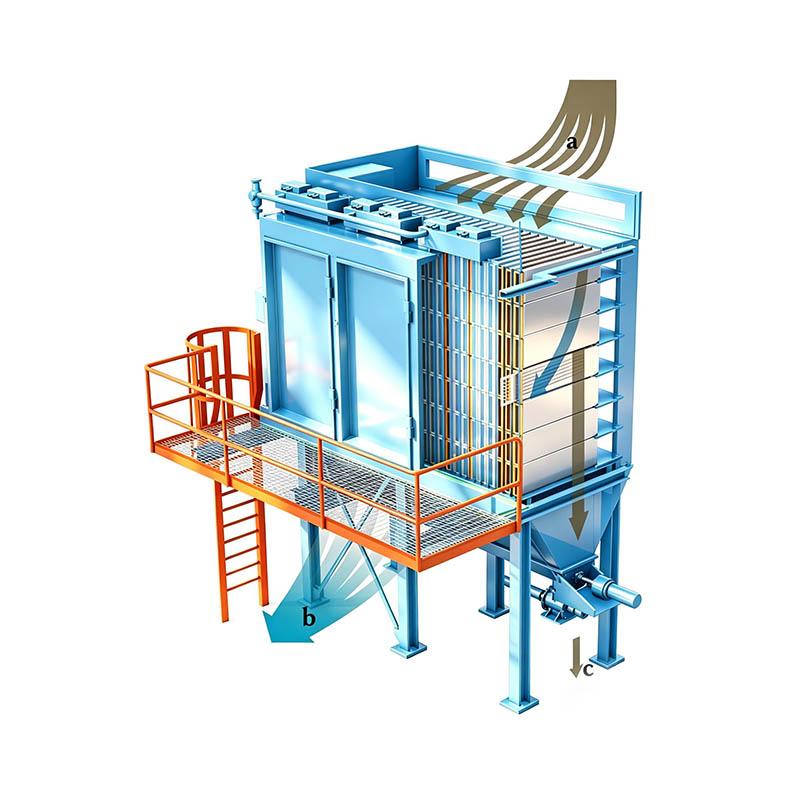
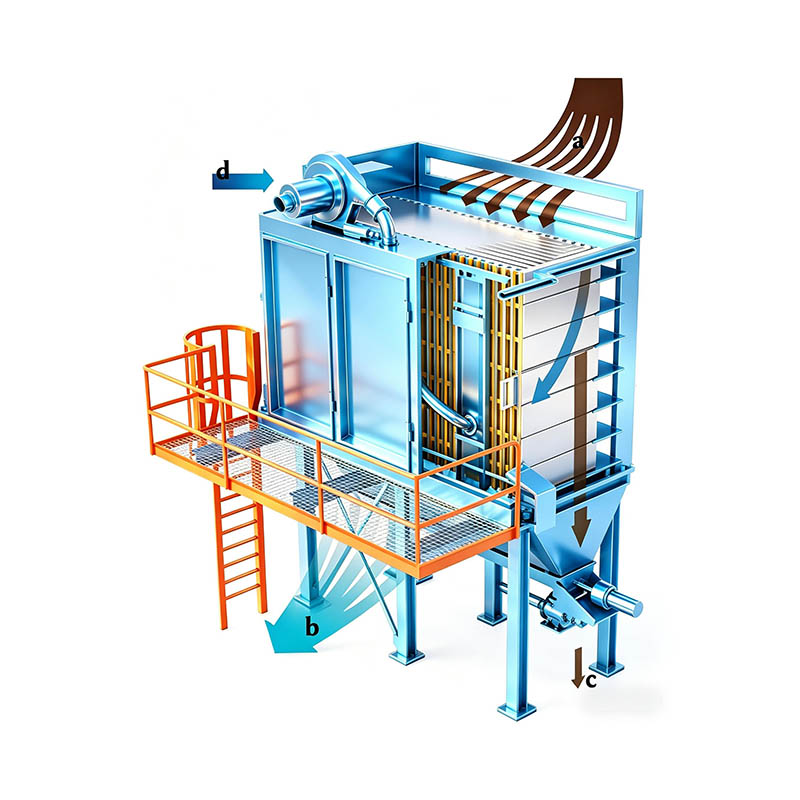
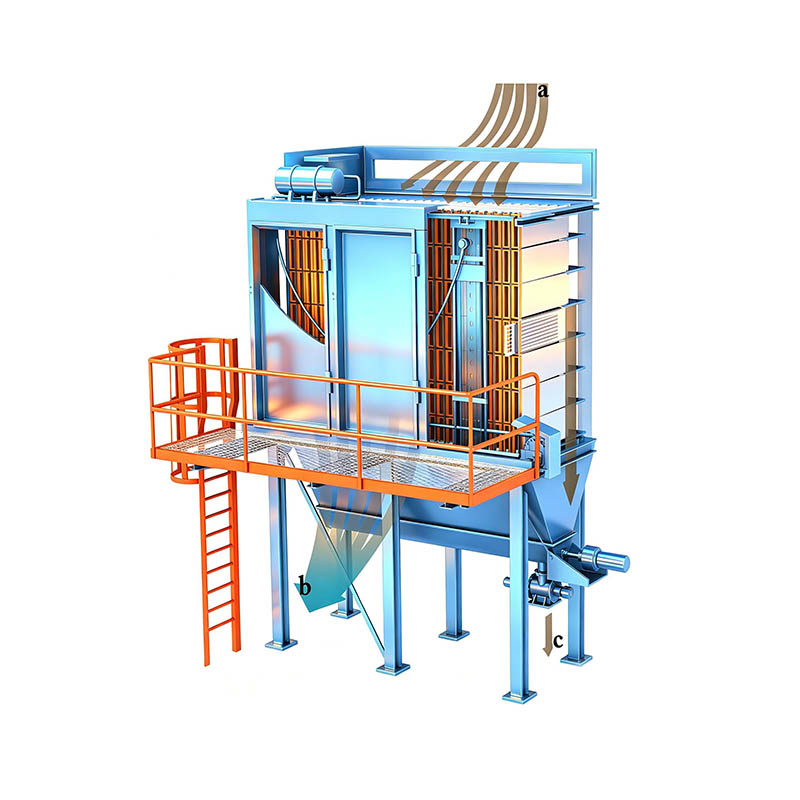
Auxiliary equipment is typically positioned at defined points within the ducting and discharge path of a dust collection system rather than inside the primary filtration chamber itself. Airflow enters through ductwork from individual dust-generating points, passes through blast gates or dampers that regulate volume at each connection, and continues to the primary collector where particulate is separated from the air stream. Collected material then exits through a discharge mechanism, most often a rotary airlock, into a storage container or downstream conveying system.
Pressure-related auxiliary components operate on a monitoring and response principle. A differential pressure gauge continuously compares pressure on either side of the filter media, and a rising reading generally signals that filters are accumulating dust faster than they are being cleaned, which is a common early indicator that maintenance is approaching. Fire and explosion safety components, such as spark detection and suppression equipment, are positioned upstream of the collector to identify and address ignition sources before they reach the filter media, where accumulated dust presents a higher combustion risk.
Technical Specifications and Key Performance Factors
Selecting appropriately sized and rated auxiliary equipment depends on matching component specifications to the primary dust collector and the material being handled.
| Component | Key Specification | Typical Consideration |
|---|---|---|
| Rotary airlock valve | Rotor diameter and RPM rating | Matched to discharge volume and material bulk density |
| Manual or automatic damper | Duct diameter and actuation type | Sized to duct branch and airflow balancing needs |
| Differential pressure gauge | Pressure range and display type | Range should exceed expected operating differential |
| Spark arrestor | Detection response time | Positioned upstream of the collector inlet |
| Explosion venting panel | Vent area and rupture pressure rating | Sized according to enclosure volume and dust classification |
| Blast gate | Duct diameter and material construction | Matched to branch duct size for airflow control |
Material characteristics also influence component selection. Abrasive or heavier materials generally require rotary airlocks with hardened internal surfaces, while combustible dust classifications determine whether spark detection and explosion venting are required by the applicable safety standards for a given facility.
Comparing Common Auxiliary Equipment Types
Facilities often need to decide among several component types that serve a similar function but differ in cost, control precision, and maintenance requirements.
| Equipment Type | Primary Function | Relative Maintenance Need |
|---|---|---|
| Manual blast gate | Fixed airflow adjustment at a duct branch | Lower, occasional lubrication and inspection |
| Automatic damper | Dynamic airflow control based on system demand | Higher, includes actuator and control components |
| Rotary airlock valve | Continuous material discharge without air loss | Moderate, rotor and seal wear over time |
| Screw conveyor discharge | Material transport away from the collector hopper | Moderate, drive and bearing maintenance |
Manual blast gates are generally suited to systems with stable, predictable airflow needs across a limited number of pickup points, while automatic dampers are more often specified in systems where airflow demand changes throughout a shift, such as when multiple machines are switched on and off intermittently.
6 Tips for Dust-Collection Upgrades
- Review airflow balance across the system. Before adding new equipment, check whether existing ductwork and dampers are already balanced, since an upgrade to one branch can shift airflow elsewhere in the system.
- Match new components to existing filter media. Confirm that added auxiliary equipment does not introduce pressure conditions outside the operating range of the current filter cartridges or bags.
- Assess combustible dust classification first. If the material being handled is classified as combustible, confirm whether spark detection or explosion venting requirements apply before selecting other upgrade components.
- Prioritize discharge reliability. A rotary airlock or conveyor upgrade at the discharge point often has a larger impact on overall system efficiency than upgrades further upstream, since discharge leaks reduce vacuum across the entire system.
- Add monitoring before adding capacity. Installing a differential pressure gauge or monitoring sensor ahead of a capacity upgrade helps establish a baseline for comparing performance before and after the change.
- Plan for maintenance access. When positioning new auxiliary equipment, leave sufficient clearance for inspection, cleaning, and component replacement, since limited access is a common reason maintenance tasks get delayed.
Selection Considerations and Purchasing Factors
Selecting auxiliary equipment for a dust collection system generally involves reviewing airflow volume requirements, material characteristics, duct sizing, and compatibility with the existing primary collector. Facilities handling combustible dust also need to confirm that added components meet applicable fire and explosion safety requirements for the material classification involved. Beyond technical fit, lead time and parts availability are practical factors, since a component failure on a discharge valve or damper can affect the entire system's operation until it is replaced.
It is also worth reviewing how a new component will be controlled, whether through manual adjustment, a standalone automatic actuator, or integration into an existing control panel, since this affects both installation complexity and future maintenance procedures.
How to Properly Start Up Your Dust Collector
Startup procedures vary by system design, but the following sequence reflects commonly followed steps across many dust collection installations.
| Step | Action |
|---|---|
| 1 | Confirm all blast gates and dampers are in their intended starting positions before energizing the fan. |
| 2 | Check that the discharge mechanism, such as a rotary airlock, is clear of obstructions and rotates freely. |
| 3 | Verify differential pressure gauge readings are within the expected baseline range for clean filters. |
| 4 | Start the fan and allow the system to reach stable airflow before opening additional branch connections. |
| 5 | Monitor initial pressure readings and airflow at individual pickup points to confirm balanced distribution. |
| 6 | Record baseline readings for future comparison during routine inspections. |
Common Mistakes and Overlooked Considerations
One frequent oversight is adding capacity to a dust collector without reassessing whether existing auxiliary equipment, such as dampers or discharge valves, can handle the increased airflow or material volume. Another is neglecting differential pressure monitoring until airflow problems are already noticeable, at which point filter loading may already be affecting collection efficiency across the system. Facilities sometimes also overlook seal and gasket condition on rotary airlocks, since a worn seal can allow air leakage that reduces system vacuum without an obvious external sign.
Industry Trends and Future Outlook
Facilities are increasingly incorporating sensor-based monitoring into dust collection systems, allowing differential pressure, airflow, and discharge valve status to be tracked continuously rather than checked only during scheduled inspections. This shift supports earlier identification of developing issues, such as gradual filter loading or discharge valve wear, before they affect overall system performance. There is also continued attention to combustible dust safety requirements across industries handling fine particulate, which is influencing how auxiliary safety equipment such as spark detection and explosion venting is specified during system upgrades.
Conclusion
Dust Collection Auxiliary Equipment plays a supporting but essential role in how reliably a dust collection system performs, covering airflow control, material discharge, pressure monitoring, and fire or explosion safety. Reviewing airflow balance, material characteristics, and monitoring needs before selecting or upgrading these components helps maintain consistent system performance and reduces the likelihood of unplanned downtime.
FAQ
What is auxiliary equipment in a dust collection system?
It refers to supporting components such as rotary airlocks, dampers, pressure gauges, and safety devices that work alongside the primary dust collector to manage airflow, material discharge, and system safety.
What accessories improve dust collector performance?
Components such as blast gates for airflow balancing, differential pressure gauges for filter monitoring, and rotary airlocks for discharge reliability commonly contribute to more consistent performance.
How do you properly start up a dust collector?
A typical sequence includes checking damper and blast gate positions, confirming the discharge mechanism is clear, verifying baseline pressure readings, and starting the fan before gradually opening additional branch connections.
What causes dust collector inefficiency?
Common causes include filter loading that raises differential pressure, air leakage at the discharge point, and unbalanced airflow across duct branches.
How often should dust collection equipment be inspected?
Inspection frequency depends on usage intensity and material type, but checking pressure readings, discharge valve seals, and duct connections during routine maintenance rounds is a common practice.
Is auxiliary equipment required for combustible dust applications?
Facilities handling combustible dust generally need to evaluate whether spark detection, explosion venting, or isolation equipment applies based on the material classification and applicable safety requirements.
Can auxiliary equipment be added to an existing dust collector?
In many cases yes, provided the added component is compatible with existing duct sizing, airflow capacity, and control systems, which should be reviewed before installation.