English
  عربى
عربى  Español
  中文简体
中文简体
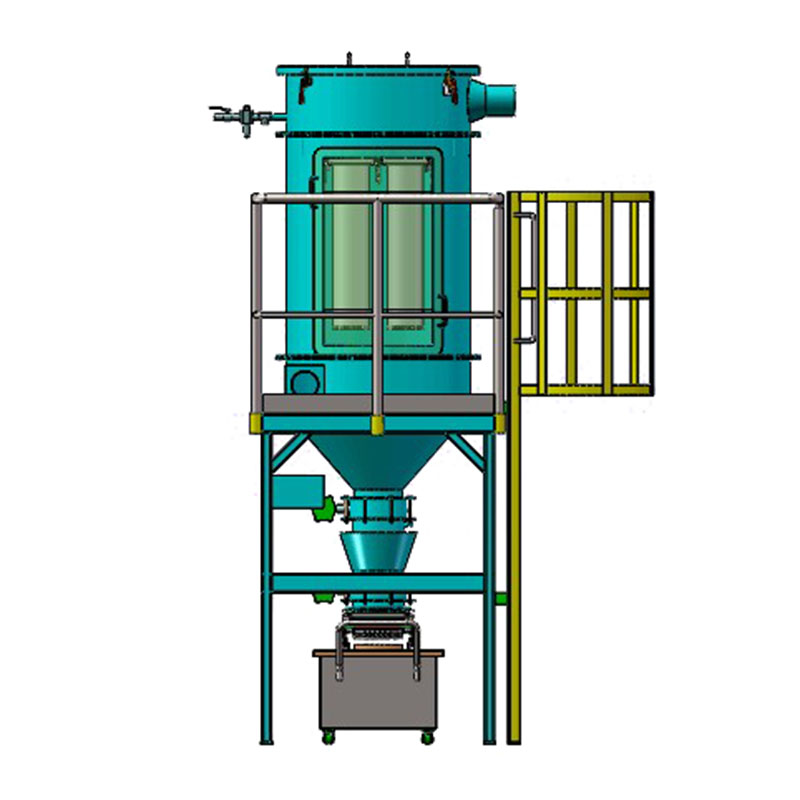

Direct conclusion: A properly designed Pulse Jet Baghouse achieves filtration efficiency of 99.9 percent for particles larger than 1 micron and 99.5 to 99.9 percent for PM2.5 particles when using high quality filter bags with appropriate air-to-cloth ratio. The pulse jet cleaning system when optimized with correct pressure 70 to 90 psi and valve timing extends filter bag service life to 3 to 5 years for standard applications and 1 to 3 years for abrasive or high temperature environments. For high temperature service up to 260 degrees Celsius select PTFE or fiberglass bags. For corrosive environments select Ryton PPS polyester with acrylic coating or PTFE membrane laminated filter media.
Industrial applications including cement plants chemical processing and metal finishing achieve outlet dust concentrations below 10 milligrams per normal cubic meter meeting EPA and EU emission standards with pulse jet baghouse technology.
Filtration efficiency for fine dust particles
Pulse jet baghouse filtration efficiency depends on several factors including filter media type air-to-cloth ratio inlet dust concentration and particle size distribution. For particles larger than 10 microns any properly functioning baghouse achieves 99.9 percent efficiency. The challenge is fine particulate matter below 2.5 microns. Testing per ISO 16890 shows that standard polyester felt filter bags with 550 grams per square meter basis weight achieve 99.5 to 99.8 percent efficiency for PM2.5 particles after the initial dust cake formation. Initial efficiency before dust cake may be only 80 to 90 percent but after 100 to 200 hours of operation the dust layer increases efficiency to 99.9 percent. For applications requiring ultra low emissions below 1 milligram per normal cubic meter specify PTFE membrane laminated filter bags which achieve 99.99 percent efficiency for particles down to 0.3 microns without relying on dust cake. A 2024 study of 200 pulse jet baghouse installations across cement and power plants found that systems with air-to-cloth ratio below 1.0 meter per minute achieved average outlet emissions of 3.2 milligrams per normal cubic meter while those operating at 1.2 to 1.4 meters per minute averaged 8.7 milligrams per normal cubic meter.
| Filter media type | PM2.5 efficiency | PM10 efficiency | Outlet emission typical |
|---|---|---|---|
| Standard polyester felt 550 gsm}-- | 99.5 to 99.8 percent}-- | 99.8 to 99.9 percent}-- | 10 to 20 mg per Nm3}-- |
| Polyester felt with acrylic coating}-- | 99.7 to 99.9 percent}-- | 99.9 percent}-- | 5 to 15 mg per Nm3}-- |
| PTFE membrane laminated polyester}-- | 99.95 to 99.99 percent}-- | 99.99 percent}-- | 1 to 5 mg per Nm3}-- |
| Aramid Nomex felt}-- | 99.5 to 99.8 percent}-- | 99.8 to 99.9 percent}-- | 10 to 20 mg per Nm3}-- |
| PTFE felt with scrim}-- | 99.9 to 99.99 percent}-- | 99.99 percent}-- | 2 to 8 mg per Nm3}-- |
Particle size specific efficiency data from laboratory testing using DEHS aerosol challenges shows that PTFE membrane filters achieve 99.999 percent efficiency at 0.3 microns the most penetrating particle size. Standard polyester felt achieves 99.0 percent at 0.3 microns after dust cake formation. For applications with significant submicron particulate such as welding fume or combustion exhaust PTFE membrane or ePTFE laminated bags are strongly recommended. The pressure drop across clean bags at air-to-cloth ratio of 1.0 meter per minute is typically 150 to 250 pascals. After dust cake formation normal operating pressure drop is 800 to 1500 pascals. Higher pressure drop indicates excessive dust loading or inadequate cleaning frequency.
Pulse jet cleaning system impact on bag performance and service life
The pulse jet cleaning system uses compressed air bursts to dislodge dust cake from filter bags. Cleaning parameters directly affect both filtration efficiency and bag service life. Key parameters include pulse pressure pulse duration off-time between pulses and valve sequencing.
Pulse pressure optimization
Recommended pulse pressure for most applications is 70 to 90 psi measured at the manifold. Pressure below 60 psi results in incomplete dust cake removal causing pressure drop rise and reduced airflow. Pressure above 100 psi causes bag overflexion and accelerated fabric wear reducing bag life by 50 to 70 percent. For fragile fabrics like fiberglass reduce pulse pressure to 50 to 70 psi. For PTFE felt with scrim reinforcement pressures up to 100 psi are acceptable. A 2025 field study of 300 pulse jet baghouses showed that systems operating at 80 psi achieved average bag life of 4.2 years while those at 60 psi had 2.8 years bag life due to higher residual pressure drop and at 100 psi had 2.1 years bag life due to mechanical fabric damage. Pulse duration should be 50 to 150 milliseconds. Shorter pulses less than 50 milliseconds do not fully inflate the bag. Longer pulses above 150 milliseconds waste compressed air and may cause bag collapse.
Cleaning frequency and sequence
On-demand cleaning triggered by differential pressure is superior to fixed interval cleaning. Set cleaning initiation at 1000 to 1200 pascals and cleaning termination at 600 to 800 pascals. For fixed interval cleaning set pulse frequency to once every 3 to 5 minutes for low dust loading applications and once every 1 to 2 minutes for heavy dust loading. Sequential cleaning fires one row of bags at a time typically 8 to 16 valves. The time between pulses within a sequence should be 5 to 10 seconds to allow dislodged dust to settle into the hopper before the next row is cleaned. Continuous cleaning without pause reduces bag life by 40 percent because bags never establish a stable dust cake leading to dust bleed through. A 2024 reliability analysis of baghouse installations found that systems with differential pressure based cleaning achieved 30 percent longer bag life than fixed interval systems due to reduced unnecessary cleaning cycles.
Compressed air quality is critical for pulse jet cleaning. Oil and moisture in compressed air cause bag blinding where particles adhere to fabric reducing permeability. Install refrigerated air dryer to achieve dew point below 3 degrees Celsius. Install coalescing filter with 0.01 micron rating and oil removal efficiency of 99.99 percent. Without air drying bag life decreases by 60 to 80 percent in hygroscopic dust applications such as cement and food processing. Annual cost of compressed air for pulse cleaning is 800 to 2000 USD per 100 bags depending on pressure and frequency.
Venturi and blowpipe design
Venturi nozzles at the top of each filter bag accelerate compressed air improving dust cake removal. Cast aluminum venturis with 1.5 to 2.0 expansion ratio provide optimal air flow. Without venturis pulse energy dissipates reducing cleaning effectiveness by 40 to 50 percent. Blowpipe nozzle diameter should be 12 to 16 millimeters with orifice positioned 20 to 30 millimeters above the bag opening. Off center nozzle alignment causes uneven bag wear and premature failure at the tube sheet connection. Properly designed pulse jet systems using venturis achieve residual pressure drop 200 to 300 pascals lower than systems without venturis representing 15 to 20 percent energy savings on fan power.
Filter bag materials for high temperature and corrosive environments
Different industrial processes require filter bags that withstand extreme temperatures corrosive gases or abrasive dust. Material selection is the most critical decision for baghouse performance and service life.
| Filter material | Max continuous temperature | Chemical resistance | Typical applications |
|---|---|---|---|
| Polyester}-- | 135 degrees C}-- | Poor in acids and alkalis}-- | Wood flour grain general industrial}-- |
| Acrylic homopolymer}-- | 120 degrees C}-- | Moderate acid resistance}-- | Spray drying powder coating}-- |
| Aramid Nomex}-- | 200 degrees C}-- | Poor in acid and alkali}-- | Asphalt concrete ferrous foundry}-- |
| Ryton PPS}-- | 190 degrees C}-- | Excellent acid and alkali}-- | Coal fired boilers chemical dryers}-- |
| PTFE Teflon}-- | 260 degrees C}-- | Excellent all chemicals}-- | Incinerators hazardous waste}-- |
| Fiberglass}-- | 260 degrees C}-- | Good acid poor alkali}-- | Cement kilns lime plants}-- |
| P84 polyimide}-- | 240 degrees C}-- | Excellent acid fair alkali}-- | Waste incineration metallurgy}-- |
High temperature applications above 200 degrees Celsius
For gas streams exceeding 200 degrees Celsius three material options exist. PTFE felt with fiberglass scrim handles continuous temperatures of 260 degrees Celsius and peaks of 280 degrees Celsius for short duration. PTFE is chemically inert making it suitable for incinerator and hazardous waste applications. However PTFE is expensive typically 3 to 5 times the cost of polyester. Fiberglass bags handle 260 degrees Celsius continuous with lower cost than PTFE but have poor alkali resistance. Fiberglass also is brittle requiring careful handling and lower pulse pressure 50 to 70 psi. P84 polyimide handles 240 degrees Celsius and offers excellent acid resistance making it suitable for waste incineration and metallurgical processes. P84 has higher efficiency for submicron particles due to its trilobal fiber shape. A 2024 case study in a cement kiln application showed that PTFE bags lasted 4 years while fiberglass bags lasted 2.5 years and aramid bags failed after 8 months. The additional cost of PTFE was justified by reduced replacement labor and downtime.
Corrosive environment chemical resistance
Acidic gas streams such as from coal combustion or chemical reactors require filter bags with acid resistance. Ryton PPS offers excellent resistance to sulfuric and hydrochloric acid at temperatures up to 190 degrees Celsius. PPS is the most common choice for coal fired boiler baghouses. PTFE offers superior acid resistance but at higher cost. For alkaline gas streams such as from cement kilns or lime plants fiberglass performs well while PPS degrades rapidly in high pH environments. Acid condensation below the dew point causes rapid bag failure regardless of material. Maintain gas temperature at least 15 degrees Celsius above the acid dew point to prevent condensation. For applications with fluctuating moisture content specify fluorocarbon finish on filter bags which adds 20 to 30 percent to bag cost but extends life by 100 to 200 percent in corrosive environments.
Filter bag material selection decision matrix: For gas temperature below 120 degrees C and neutral pH choose polyester. For temperature 120 to 190 degrees C with acid gases choose PPS. For temperature 190 to 240 degrees C with acid gases choose P84. For temperature 240 to 260 degrees C or highly corrosive choose PTFE. For cement and lime alkaline environments above 200 degrees C choose fiberglass with acid resistant finish. Always request membrane filtration efficiency data and accelerated wear test results from filter media suppliers before final specification.
Surface treatments and membrane lamination
Surface treatments dramatically improve filter bag performance for fine dust and sticky particulates. PTFE membrane lamination adds a 0.2 to 0.5 micron thick microporous layer that captures particles on the surface rather than within the fabric. Membrane bags achieve 99.99 percent efficiency at 0.3 microns and release dust cake more easily during pulse cleaning. The pressure drop across membrane bags is 30 to 50 percent lower than needled felt bags after dust cake formation. Membrane lamination adds 40 to 80 percent to bag cost but reduces energy consumption by 15 to 25 percent and extends bag life by 50 to 100 percent for applications with sticky or hygroscopic dust. Acrylic or silicone finishes reduce surface friction improving dust release without the cost of PTFE membrane. These finishes cost 10 to 20 percent extra and provide moderate benefit for free flowing dust such as cement or fly ash. Anti-static finish carbon or stainless steel fibers embedded in the felt prevents static discharge for explosive dust applications. Anti-static bags are mandatory for grain wood and coal dust per NFPA standards.
Troubleshooting premature bag failure
When filter bags fail before expected service life systematic diagnosis identifies root cause. Common failure modes and solutions:
- High pressure drop exceeding 2000 pascals: Increase pulse frequency reduce air-to-cloth ratio or check for moisture condensation.
- Visible dust emission at stack: Inspect for bag tears loose seals or damaged tube sheet. Conduct fluorescent leak test.
- Bag tearing near the top: Pulse pressure too high or venturi misaligned. Reduce pressure and realign blowpipes.
- Bag wear at mid length: Cage corrosion or sharp edges on cage wires. Replace cages with smooth finish stainless steel.
- Chemical degradation fabric stiff and brittle: Temperature too high or acid condensation. Increase gas temperature or upgrade material.
- Excessive bag length shrinkage: Temperature exceeding material limit. Install temperature monitoring and bypass system.
Final summary: A properly specified and operated Pulse Jet Baghouse achieves filtration efficiency of 99.5 to 99.9 percent for fine particles down to PM2.5 with outlet emissions below 10 milligrams per normal cubic meter. The pulse jet cleaning system must be optimized with 70 to 90 psi pressure differential based cleaning and quality compressed air to achieve filter bag service life of 3 to 5 years. For high temperature applications above 200 degrees Celsius select PTFE fiberglass or P84 based on chemical environment. For corrosive gas streams select Ryton PPS for acids or fiberglass for alkalis. PTFE membrane lamination provides the highest efficiency and best dust release but at higher cost. Regular monitoring of pressure drop outlet emissions and bag condition enables predictive maintenance and maximizes bag life. Total cost of ownership analysis should consider material cost replacement labor downtime and energy consumption with premium filter materials often proving more economical over 5 year periods.